


Table of Contents
A small living room can feel plain when every wall wears the same pale paint. One accent wall changes that without a full repaint or new furniture.
Accent Wall Paint Colors give a small room a focal point, depth, and warmth in a single weekend project.
These twenty-four ideas cover bold tones, soft washes, and rich darks for one wall each.
Pick a color that suits your light, test a swatch, and paint with confidence.
1. Warm Terracotta Behind the Sofa
Late sun hits the sofa wall, and a warm terracotta wash makes the whole corner glow. That clay tone adds warmth without shrinking the room or stealing light.
Paint the wall behind the sofa only, and keep the other walls a soft warm white. A cream sofa, linen cushions, and light wood will sit calmly against the clay color.
- Terracotta wall, cream sofa
- Rust cushions, woven throw
- Light wood, clay pots
Add a woven throw and a clay pot for texture, then step back and check the balance. The terracotta should feel sunny, not heavy, at every hour of the day.
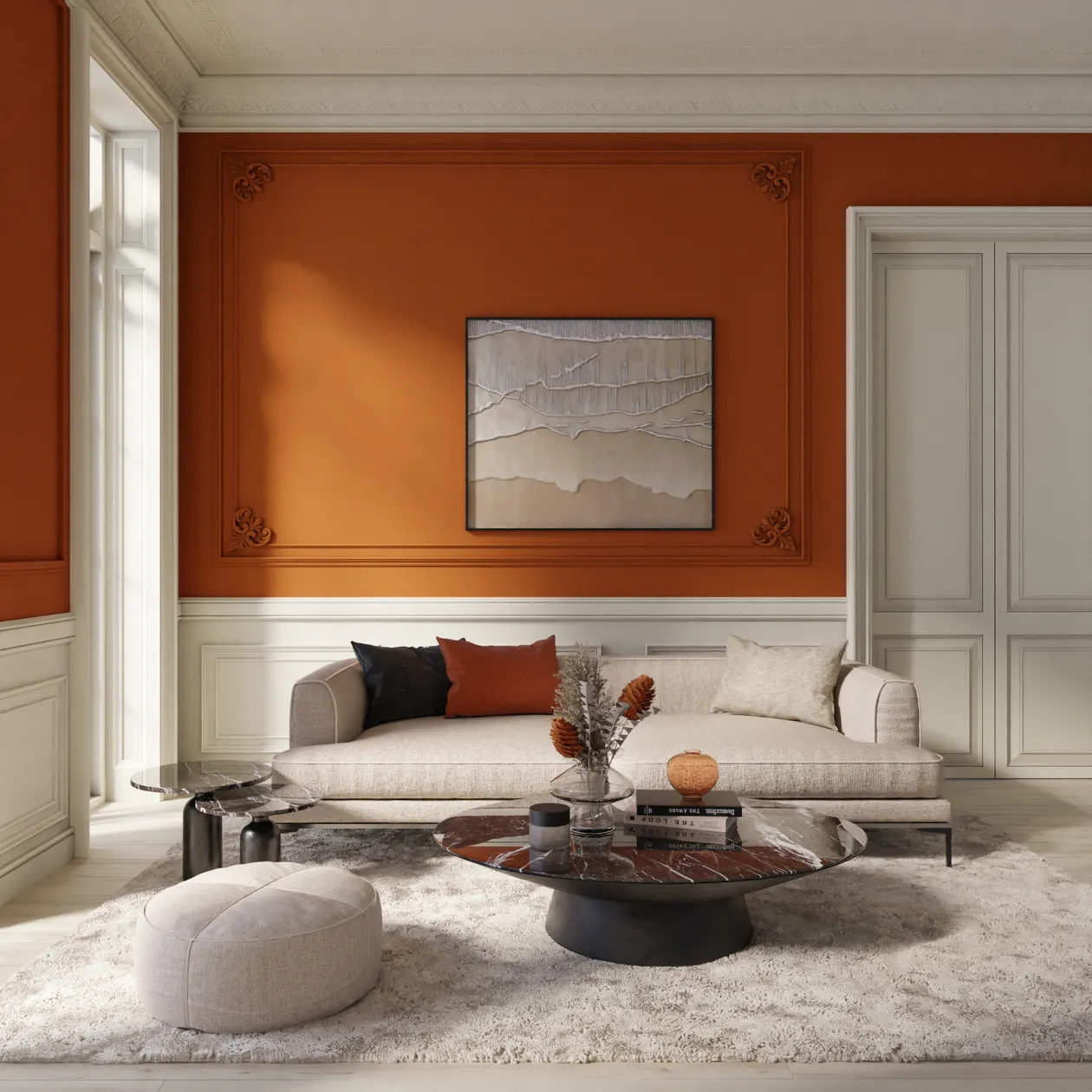
Terracotta Glows Behind the Sofa
Test terracotta swatches in evening light first.
2. Deep Teal on the Fireplace Wall
A small room often lacks a clear focal point, and a deep teal fireplace wall solves that fast. The rich tone pulls the eye to the hearth and gives the room a center.
Choose a teal with green in it, not a bright blue, so it stays calm beside warm wood. Paint the chimney breast only, and leave the side walls pale and quiet.
- Deep teal chimney breast
- Warm wood mantel, brass
- Cream sofa, pale rug
Keep the mantel simple with one brass candlestick and a small stack of books. Teal and warm wood together feel rich, yet the room still breathes.
Find out how bathroom paint color ideas bring the same bold color into a bathroom.

3. Soft Sage Green on the TV Wall
Paint the TV wall soft sage, and the black screen stops shouting at the room. The muted green softens the dark rectangle and ties it into the decor.
Pick a sage with gray undertones so it reads calm in daylight and cozy at night. Keep the media unit light wood, and let cream walls carry the rest of the room.
- Soft sage TV wall
- Light wood media unit
- Cream walls, green plants
Add a low plant and a woven basket beside the unit for a natural finish. Sage works best when the rest of the room stays pale and uncluttered.

Sage TV Wall Checklist
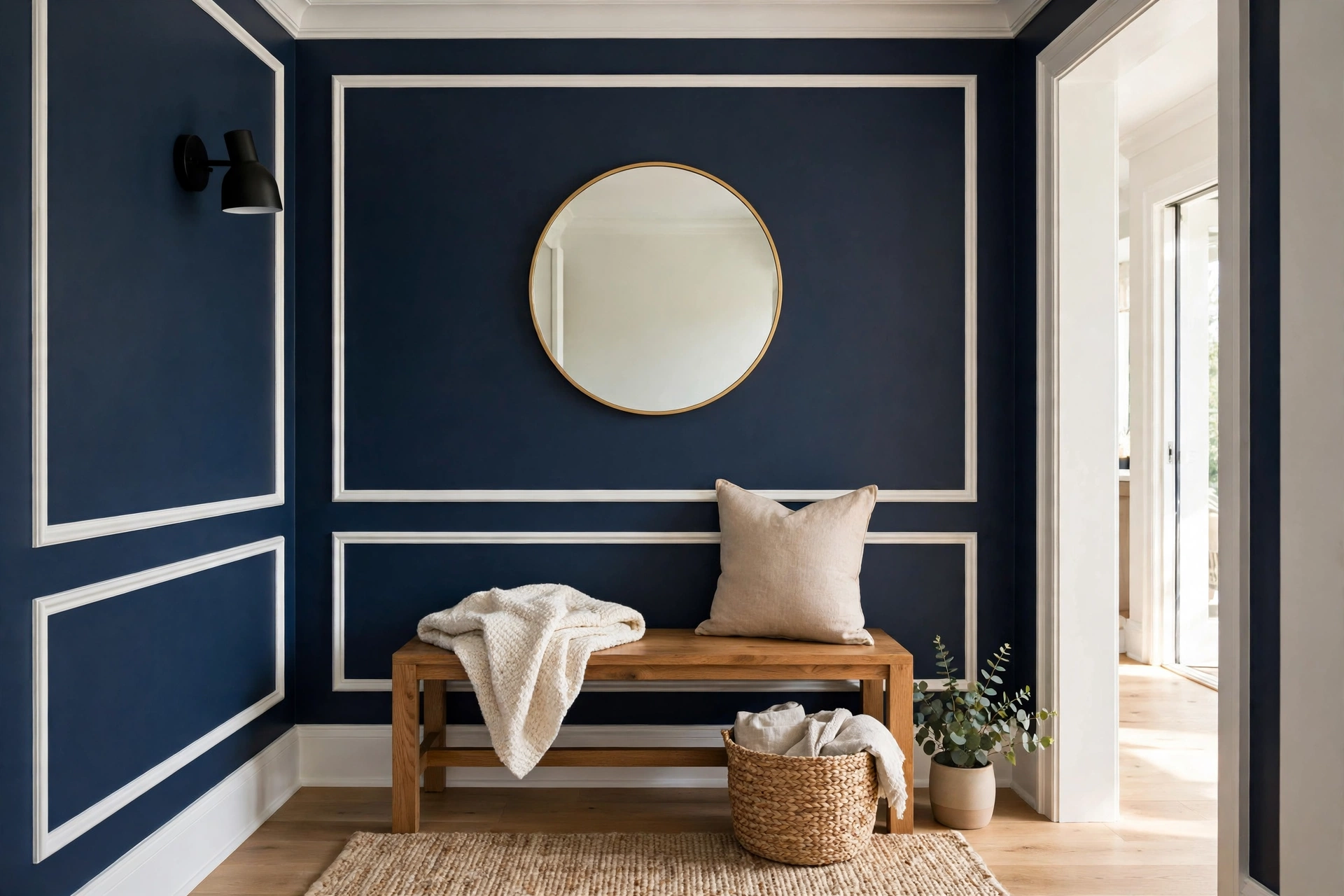
4. Navy Blue for the Entry Wall
Your entry wall sets the mood the moment you walk in, so give it a deep navy. The dark tone makes a small entry feel intentional, not cramped.
Paint the wall facing the door, and keep the ceiling and trim bright white. A wood bench, a round mirror, and a woven basket will warm the navy at once.
- Navy entry wall, white trim
- Wood bench, round mirror
- Woven basket, brass hooks
Hang brass hooks for coats and keep the floor clear so the entry stays open. Navy reads smart in a small space when the rest stays light.
5. Blush Pink in a Reading Nook
A blush wall turns a dull corner into a reading nook worth sitting in. The pale pink glow makes books, tea, and quiet evenings feel more inviting.
Brush blush on the two short walls of the corner, then keep the long walls white. A cream armchair, a small side table, and a soft lamp complete the spot.
- Pale blush corner walls
- Cream armchair, soft lamp
- Small table, stacked books
Choose a blush with warm undertones so it never reads cold or sugary. Keep patterns small and let the pink stay the gentle star of the nook.
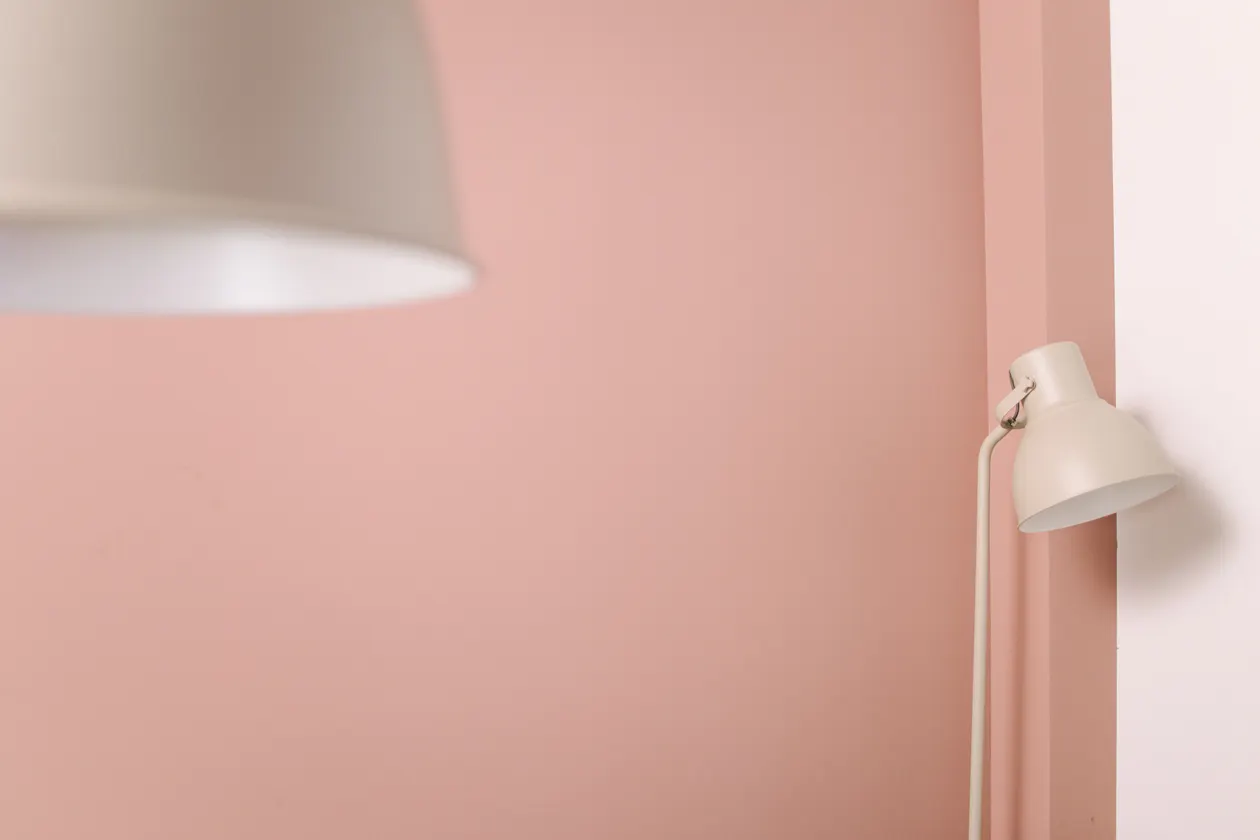
Step 1: Paint the corner blush
Step 2: Add a cream chair
Step 3: Finish with a lamp
6. Charcoal Gray Behind a Low Sofa
Charcoal sounds risky in a small room, yet one dark wall can make the space feel deeper. The trick is to paint only the wall behind a low sofa.
Keep the other walls warm white, and let the sofa sit low against the dark paint. Pale cushions, a light rug, and soft lamps will keep the mood relaxed.
- One charcoal wall only
- Warm white other walls
- Pale cushions, soft lamps
Layer in a gray throw and black frames for gentle contrast without gloom. Check the wall at night, since lamps change how charcoal reads after dark.
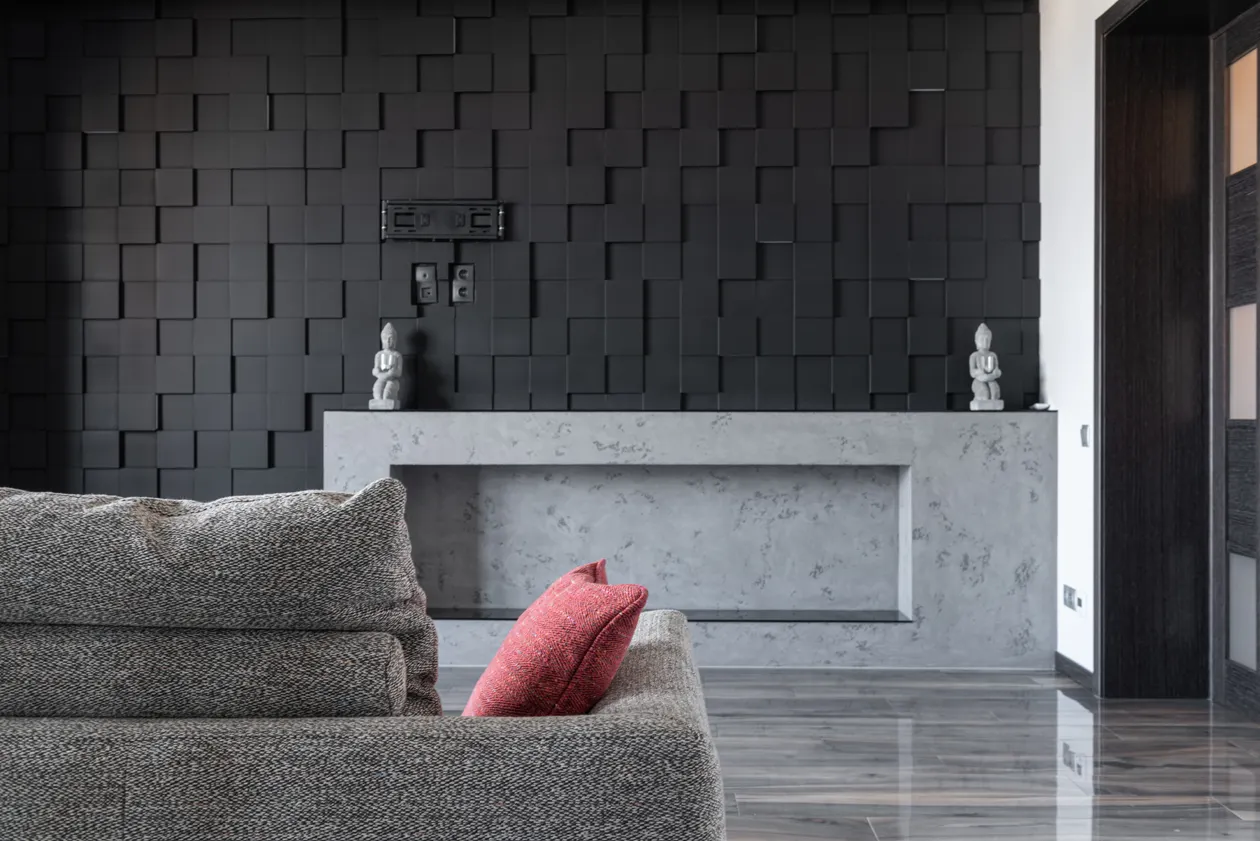
One dark wall makes a small room feel deeper.
7. Sunny Ochre on a Short Wall
Rule: keep ochre warm, the wall short, and the rest of the room pale. That small rule stops a strong yellow from taking over a compact living room.
Wash the shortest wall in a sunny ochre, then balance it with cream and light wood. A white sofa, a pale rug, and woven baskets keep the yellow cheerful, not loud.
- Sunny ochre short wall
- White sofa, pale rug
- Woven baskets, light wood
Top it with navy cushions for a calm contrast that grounds the bright wall. Ochre shines in rooms with good daylight, so test a swatch at noon first.

plain white walls, flat light
sunny ochre wall, warm glow
8. Forest Green Around the Fireplace
The mistake is painting every wall green, which can close a small room in fast. One forest green wall around the fireplace gives depth while the rest stays light.
Cover the chimney breast in a deep forest green with warm undertones, then keep the trim white. A cream sofa and brass details will glow against that rich backdrop.
- Forest green chimney breast
- Cream sofa, brass details
- White trim, pale rug
Layer in a wood mantel and a tall plant to soften the dark paint. Forest green feels calm and woodsy, and it pairs well with leather and linen.

- ▸Deep forest green wall
- ▸Cream sofa and brass
- ▸Pale rug, tall plant
9. Dusty Blue for a Calm TV Corner
Dusty blue can quiet a busy TV corner, but the wrong blue turns cold and flat. Choose a dusty blue with gray in it, and paint only the wall behind the screen.
Keep the other walls a warm white so the contrast feels soft, not stark. A pale sofa, navy cushions, and a light wood unit will balance the cool tone.
- Dusty blue TV wall
- Pale sofa, navy cushions
- Light wood unit, linen
Add a soft lamp and a woven throw so the corner feels cozy at night. Dusty blue suits rooms with cool daylight, where warmer tones can look yellow.

keep other walls warm white
painting the whole room blue
10. Warm Greige on the Longest Wall
A greige wall bridges gray and beige, and it suits a small room that needs warmth without color. Paint the longest wall, and the room gains shape without a bold statement.
Choose a greige with warm undertones so it never reads cold beside a gray sofa. Keep the trim white, the rug pale, and the cushions in cream and tan.
- Warm greige long wall
- Gray sofa, cream cushions
- Pale rug, white trim
Finish with light wood and a black metal lamp for a quiet contrast. Greige works when you want depth that stays in the background all day.
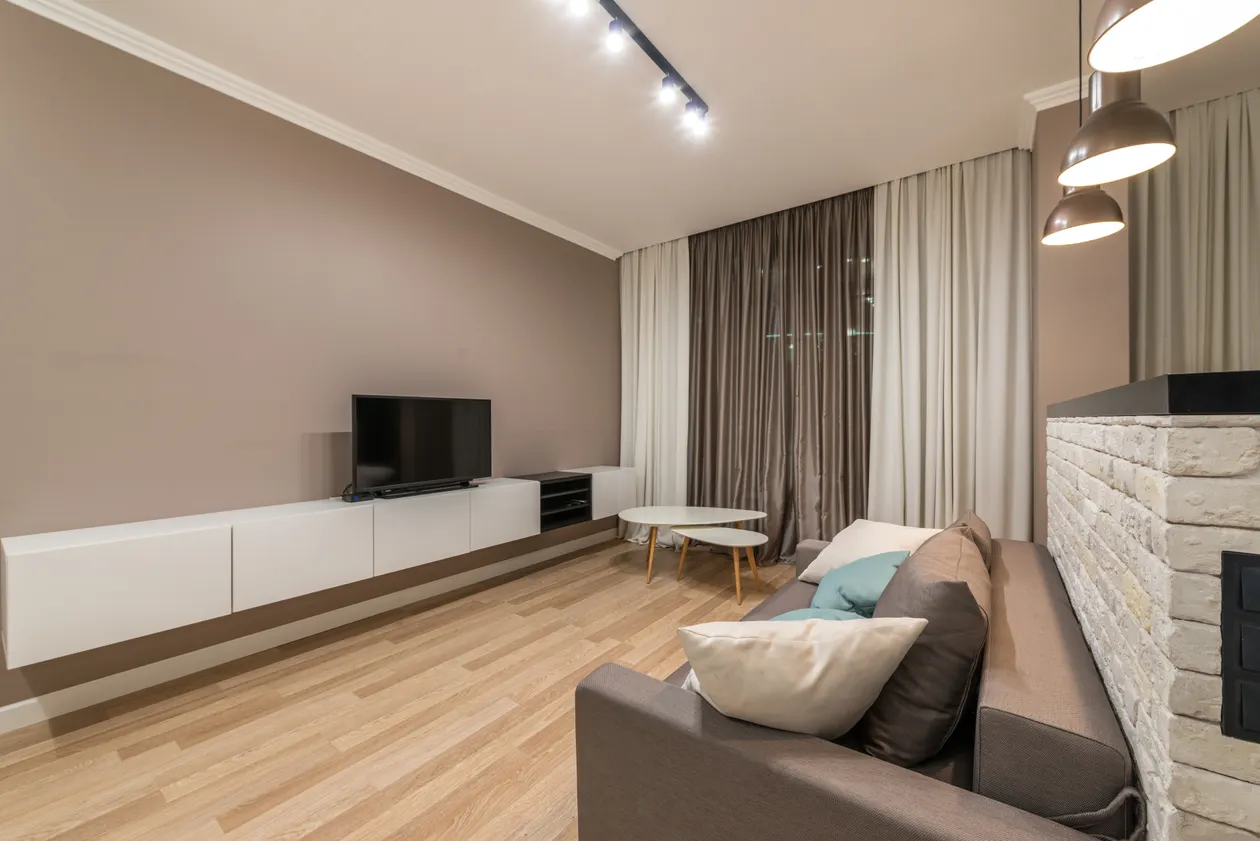
Greige Stays Quiet and Warm
Pick greige with warm undertones only.
11. Brick Red on a Brick-Free Wall
A brick red wall gives a small living room the warmth of exposed brick without any masonry. The earthy red feels cozy, lived in, and full of character.
Paint the wall behind the sofa in a muted brick red, and keep the rest cream. A tan leather chair, dark wood, and brass will sit richly against the red.
- Muted brick red wall
- Tan leather chair
- Dark wood, brass lamp
Add a woven rug and a cream throw to soften the strong tone. Brick red suits rooms with warm light, where it glows instead of shouting.

12. Pale Lavender Beside a Window Wall
Pale lavender lightens a window wall, and it makes daylight feel softer as it enters. The gentle tone suits a small room that needs calm more than drama.
Brush lavender on the wall beside the window, then keep the ceiling bright white. A white sofa, silver frames, and a gray throw keep the look fresh and airy.
- Pale lavender window wall
- White sofa, silver frames
- Gray throw, green plants
Layer in a pale rug and a green plant for a natural lift. Keep the lavender light, since a deeper purple can turn cold in a small space.

Lavender Window Wall Checklist
13. Olive Green Behind a Bookshelf Wall
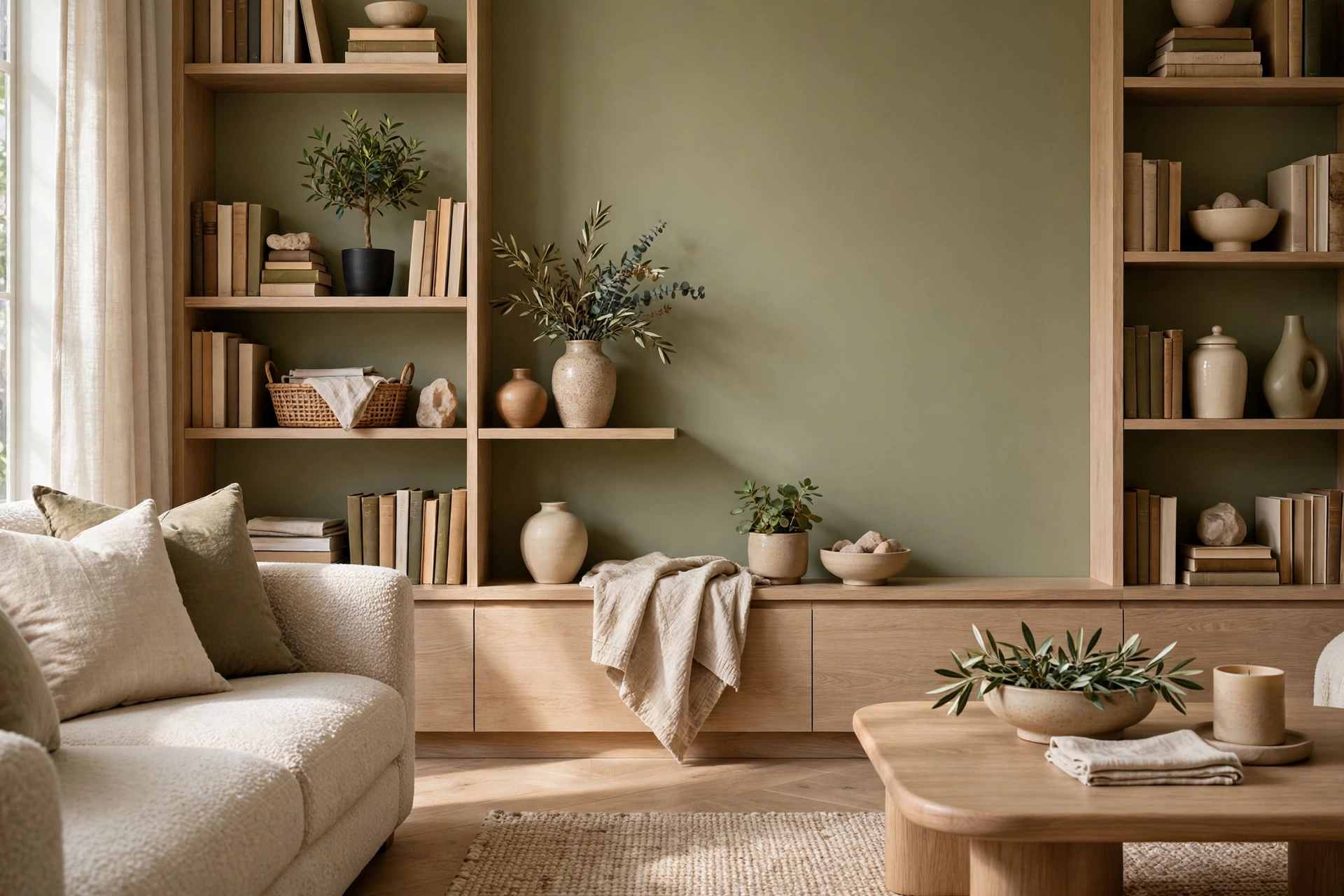
Paint the bookshelf wall olive, and the shelves gain a backdrop that makes books and objects stand out. The muted green feels earthy and calm in a small room.
Choose a soft olive with warm undertones, and paint the whole wall in that tone. Keep the shelves light wood, and let cream walls carry the rest of the space.
- Soft olive bookshelf wall
- Light wood shelves, books
- Cream walls, woven rug
Style the shelves with a mix of books, ceramics, and one small plant. Olive works best when the shelves stay tidy, so the green reads as a frame.
14. Slate Blue on the Wall Opposite the Sofa
Sit on the sofa and look across the room. A slate blue wall gives your eyes somewhere restful to land.
The cool tone balances a warm sofa and wood floor. Paint the wall opposite the sofa in a muted slate blue, and keep the side walls pale.
A cream sofa, a wood coffee table, and a pale rug will warm the cool paint.
- Muted slate blue wall
- Cream sofa, wood table
- Pale rug, brass lamp
Add navy cushions and a soft throw for depth without heaviness. Slate blue suits rooms with warm wood, where the cool wall keeps the palette balanced.
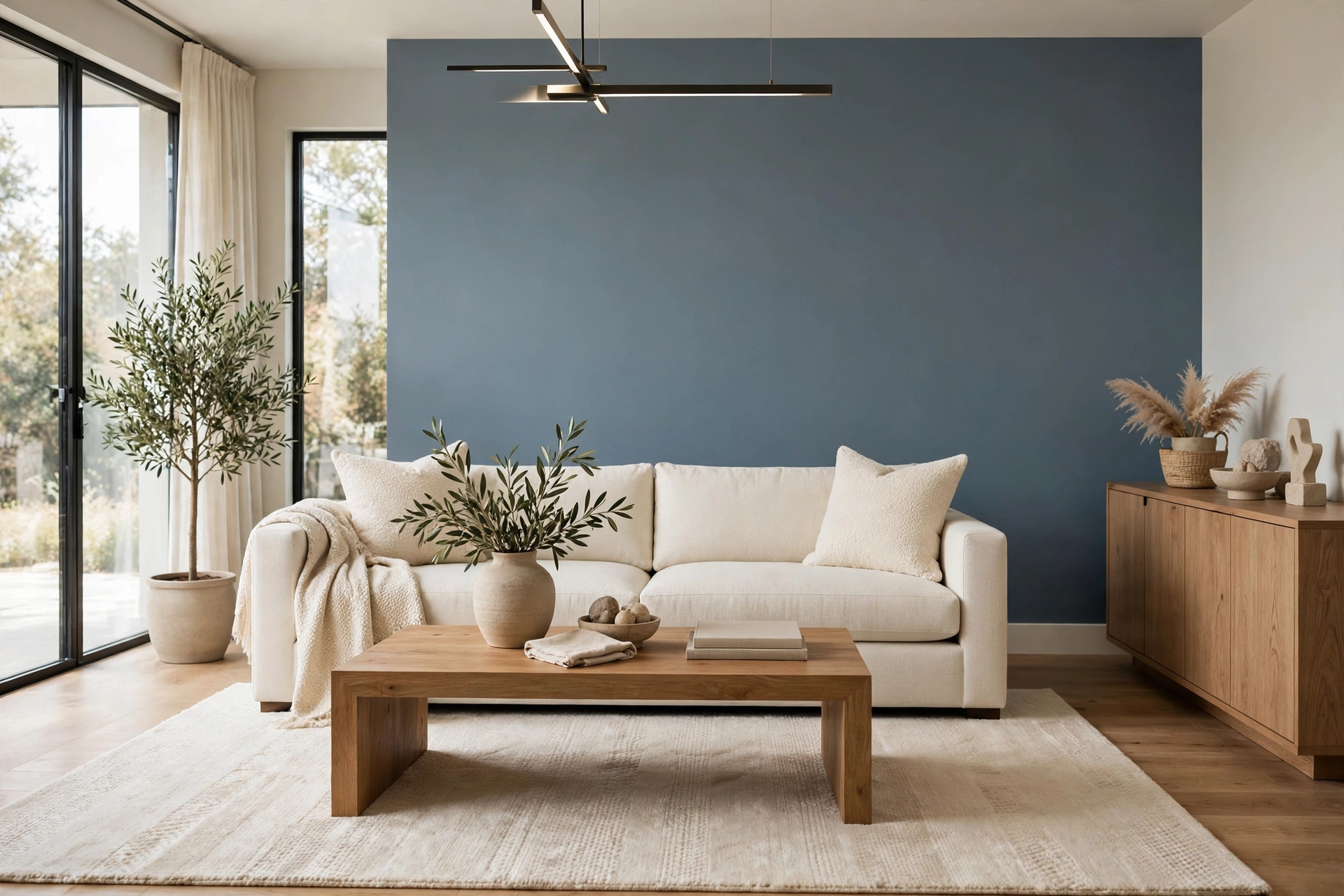
Step 1: Paint the far wall slate
Step 2: Add a cream sofa
Step 3: Warm it with wood
15. Chocolate Brown for a Cozy Corner
A chocolate brown wall sounds dark, yet in a small corner it feels like a warm hug. The deep tone makes a reading chair and a lamp feel tucked away and calm.
Paint one short corner wall chocolate, and keep the ceiling and trim white. A cream armchair, a tan throw, and a brass lamp will glow against the brown.
- Chocolate corner wall
- Cream armchair, tan throw
- Brass lamp, small table
Keep the floor light with a pale rug so the dark wall never feels heavy. Chocolate suits evening rooms, where lamplight makes the brown glow softly.
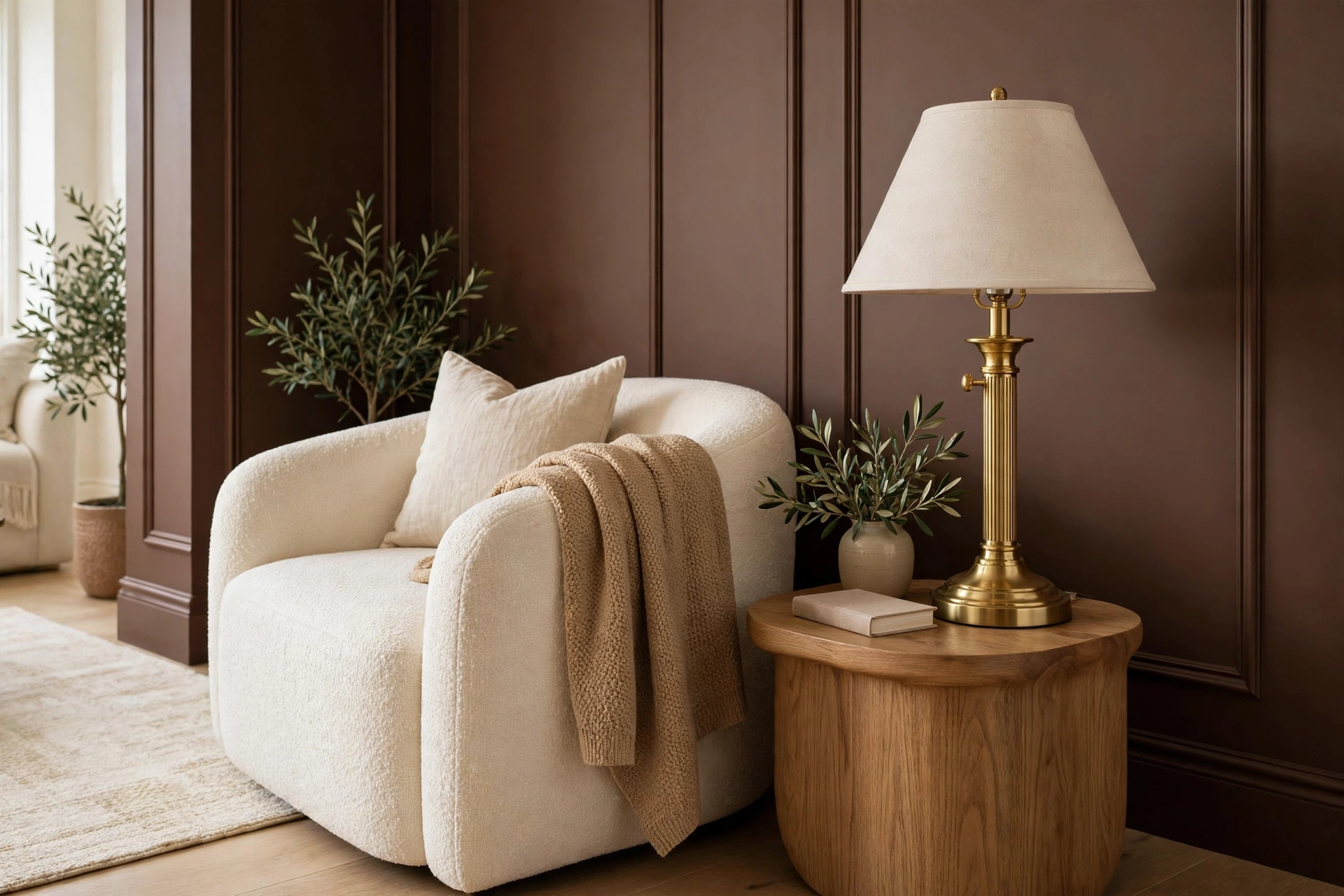
A short chocolate wall makes a corner feel tucked away.
16. Peacock Blue on a Feature Wall
Peacock blue brings jewel tone drama to a small room, and one wall is enough to carry it. The rich blue green tone feels bold, yet it stays elegant with pale furniture.
Paint the feature wall behind the sofa in peacock blue, and keep the rest white. A cream sofa, gold frames, and a pale rug will balance the strong color.
- Peacock blue feature wall
- Cream sofa, gold frames
- Pale rug, green plant
Add a velvet cushion in a deep tone for a soft contrast that matches the wall. Peacock blue needs good light, so test a swatch on a bright day first.

flat white feature wall
rich peacock blue, pale furniture
17. Soft Coral on a Dining Edge Wall
Rule: keep coral soft, the wall short, and the furniture pale. That small rule stops a bright coral from overwhelming a small living room that shares space with dining.
Wash the short wall at the dining edge in a soft coral, then balance it with white. A light wood table, cream chairs, and a pale rug keep the coral fresh, not loud.
- Soft coral dining edge wall
- Light wood table, cream chairs
- Pale rug, white trim
Top it with green plants and a simple pendant light for a gentle finish. Coral shines in rooms with warm daylight, where it reads peachy and soft.
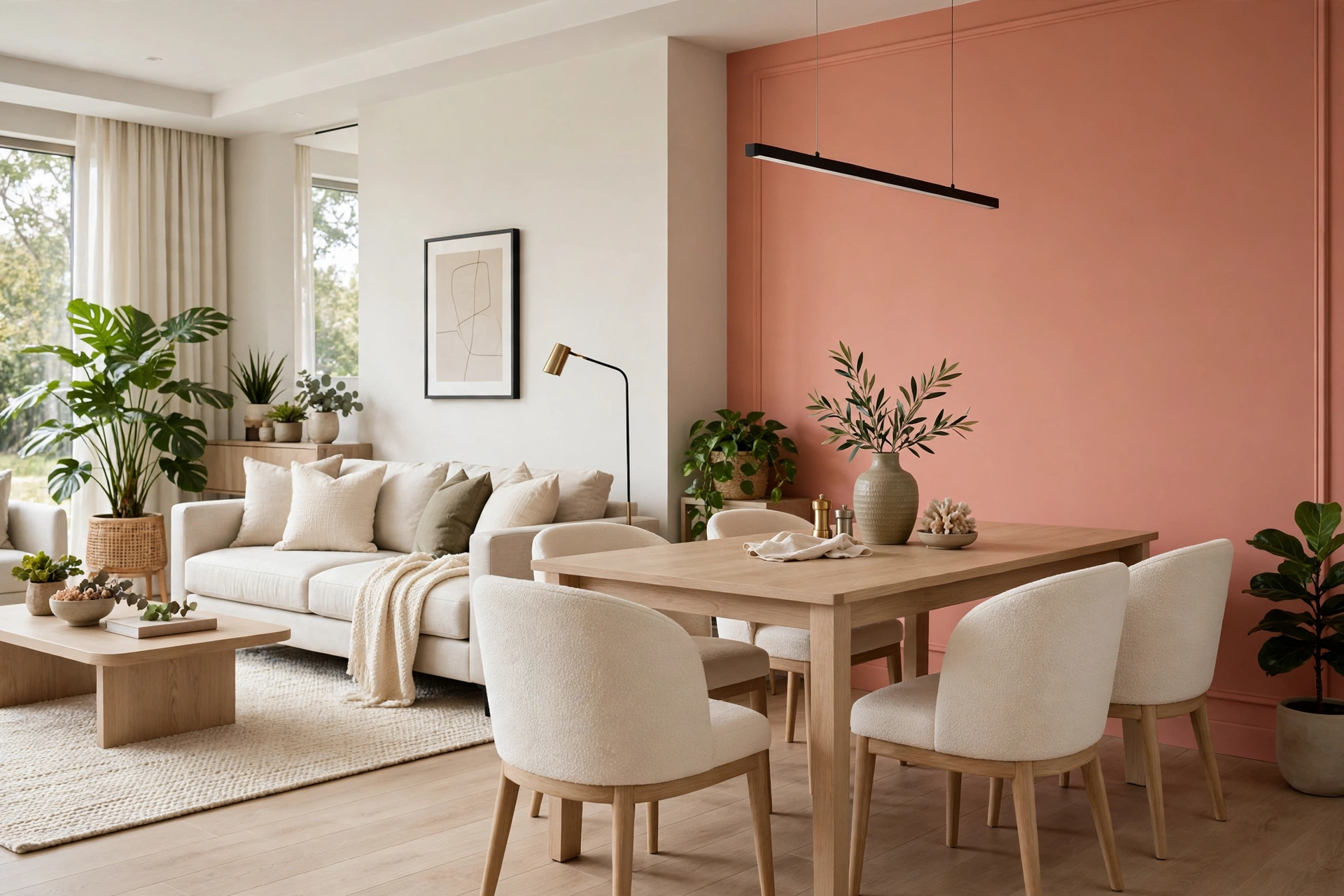
- ▸Soft coral edge wall
- ▸Light wood and cream
- ▸Green plants, pendant light
18. Mint Green on a Narrow Wall
The mistake is choosing a mint that reads icy, which can make a small room feel cold. A mint with warm undertones stays fresh beside cream furniture and light wood.
Paint a narrow wall mint, and keep the other walls a soft white. A cream sofa, a pale rug, and woven baskets will keep the mint light and cheerful.
- Warm mint narrow wall
- Cream sofa, pale rug
- Woven baskets, light wood
Add a green plant and a white frame to tie the mint into the room. Mint suits small rooms with good daylight, where it feels crisp and clean.
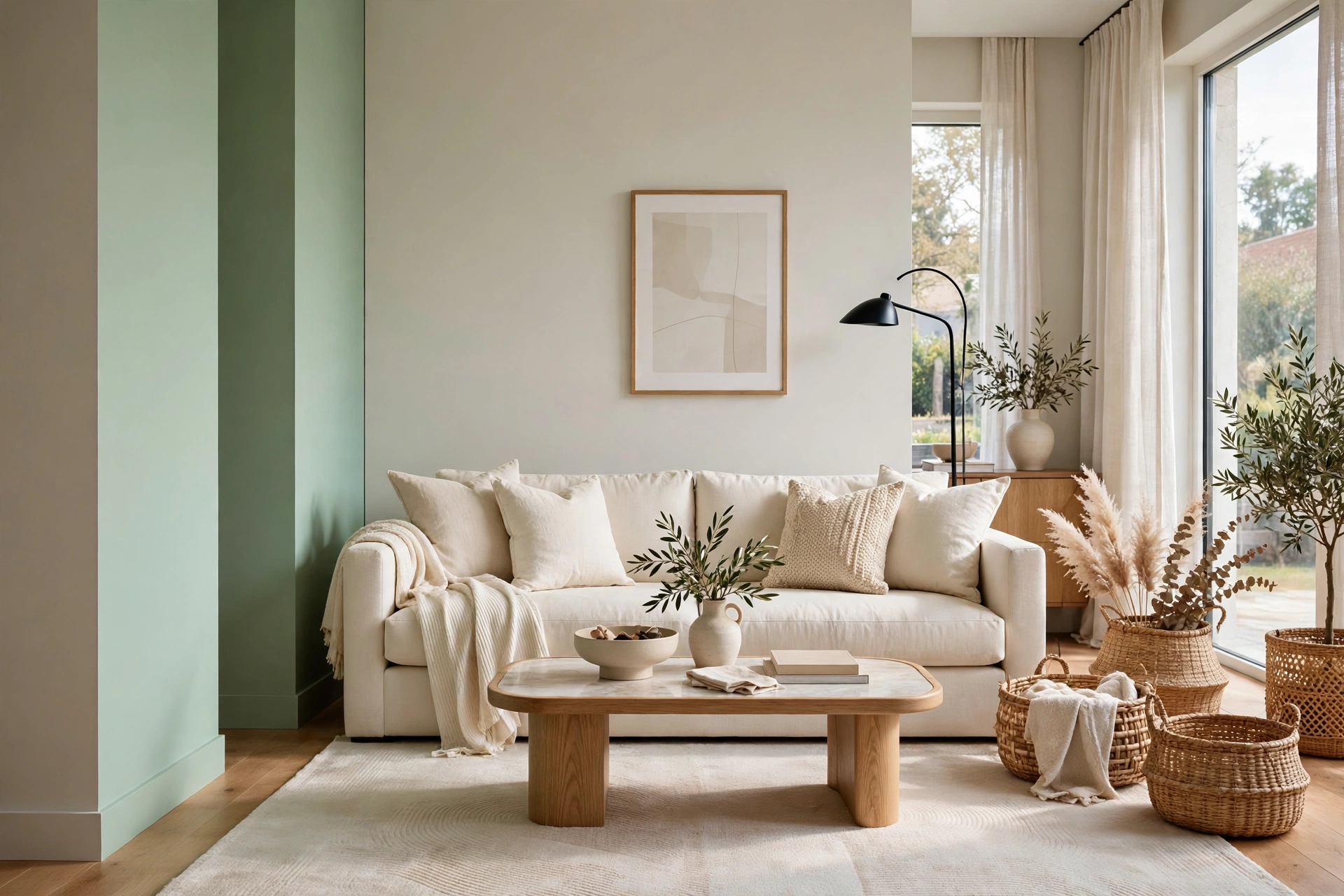
pick mint with warm undertones
painting a wide wall mint
19. Deep Plum on a Small Alcove Wall
An alcove wall in deep plum turns a shallow nook into a jewel box corner. The rich tone gives a small room drama without painting a whole wall dark.
Paint the alcove in a muted plum, and keep the surrounding walls cream. A cream chair, a brass lamp, and a small shelf will glow against the plum.
- Deep plum alcove wall
- Cream chair, brass lamp
- Small shelf, stacked books
Add a pale cushion and a soft throw so the nook feels inviting, not dark. Plum suits rooms with warm wood, where the purple reads rich and calm.
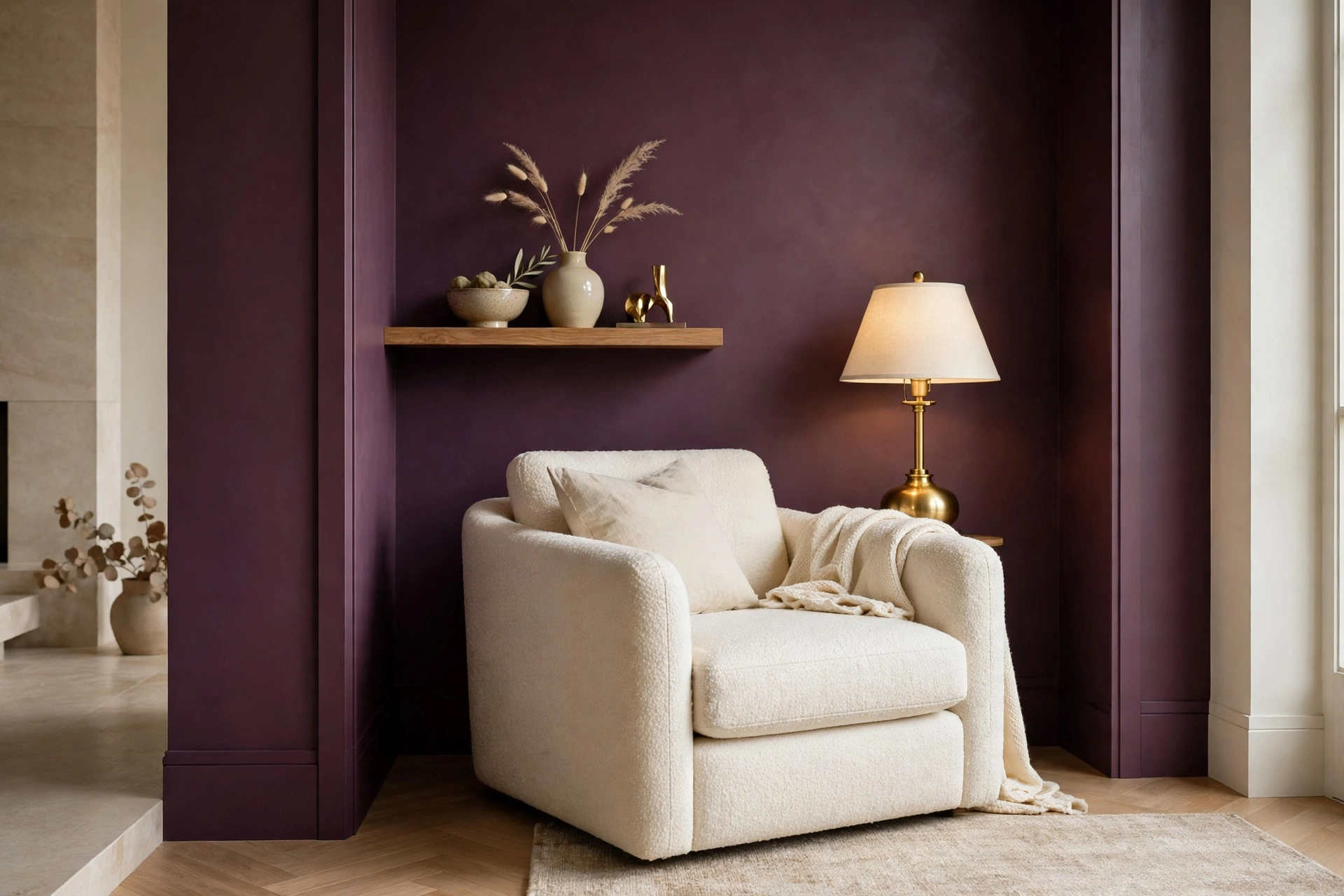
Plum Turns Alcoves Into Gems
Test plum swatches beside warm wood first.
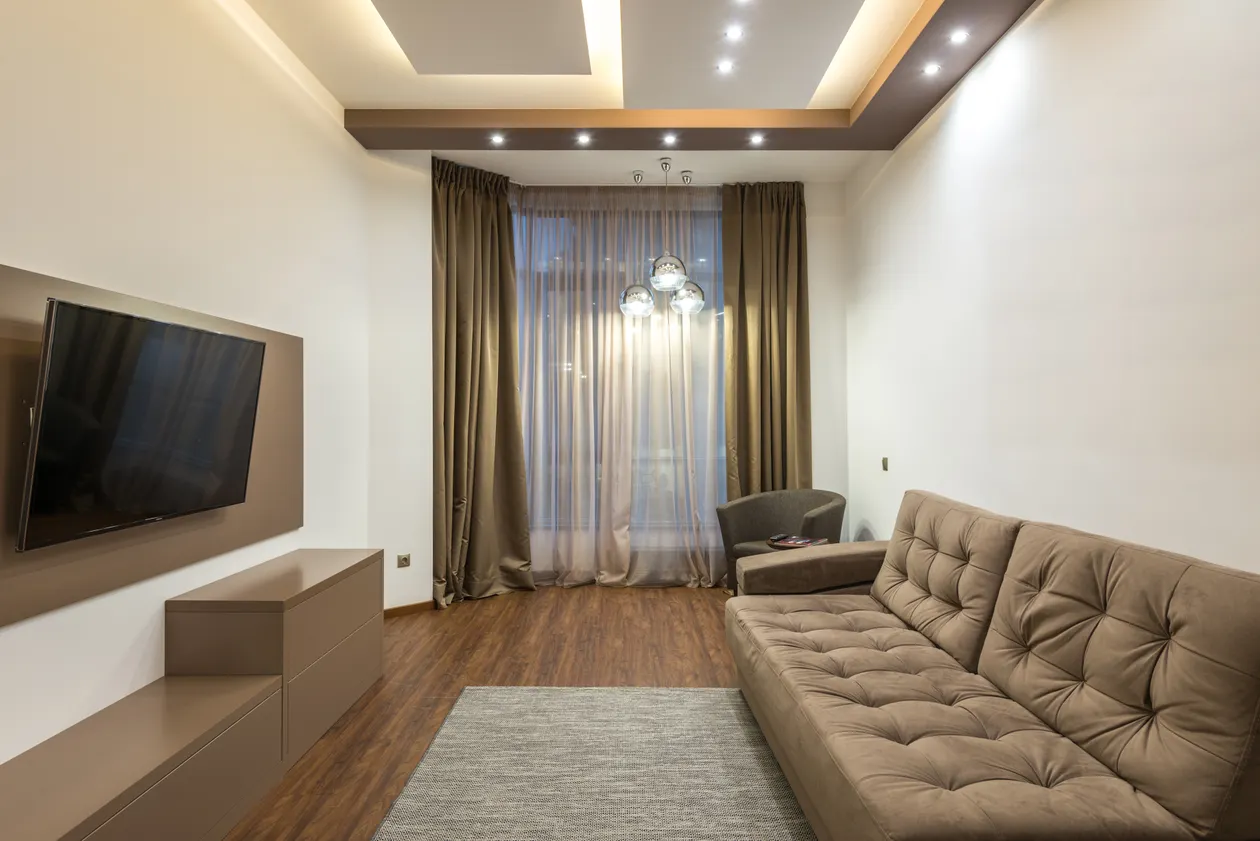
20. Warm Taupe Behind a Media Console
Warm taupe sits between brown and gray, and it gives a media wall a quiet, polished backdrop. The tone hides cables and dark screens without shouting for attention.
Paint the wall behind the media console taupe, and keep the trim white. A light wood console, a cream sofa, and a pale rug will sit calmly against it.
- Warm taupe media wall
- Light wood console
- Cream sofa, pale rug
Finish with black frames and a small plant for a clean contrast. Taupe works when you want the TV wall to blend in, not stand out.
21. Emerald Green on the Sofa Wall
Emerald green gives a small living room a lush, botanical feel in a single coat. The deep green makes cream furniture and brass details look richer at once.
Paint the sofa wall emerald, and keep the other walls a soft warm white. A cream sofa, brass lamp, and pale rug will balance the strong color well.
- Emerald sofa wall
- Cream sofa, brass lamp
- Pale rug, green plants
Layer in a velvet cushion and a wood coffee table for warmth and texture. Emerald suits rooms with plants, where the green ties the whole space together.

Emerald Sofa Wall Checklist
22. Soft Peach on a Sunlit Wall
Morning light hits a soft peach wall, and the whole room feels warm and gentle. That pale tone adds color without weight, which suits a small space well.
Brush peach on the sunniest wall, then keep the other walls white. A cream sofa, light wood, and a pale rug will keep the peach light and airy.
- Soft peach sunlit wall
- Cream sofa, light wood
- Pale rug, linen cushions
Add a green plant and a woven basket for a natural, relaxed finish. Peach works best in rooms with warm sun, where it glows instead of looking flat.

23. Denim Blue on a Half Wall
A denim blue half wall adds color at eye level while the upper wall stays white. The split keeps a small room bright, yet the blue still anchors the space.
Paint the lower half denim blue and the upper half white, with a slim wood rail between. A cream sofa, a pale rug, and navy cushions will tie the blue together.
- Denim blue lower half
- White upper half, wood rail
- Cream sofa, navy cushions
Add a wood coffee table and a soft lamp for warmth against the cool blue. Denim blue suits family rooms, where the sturdy tone hides small scuffs well.
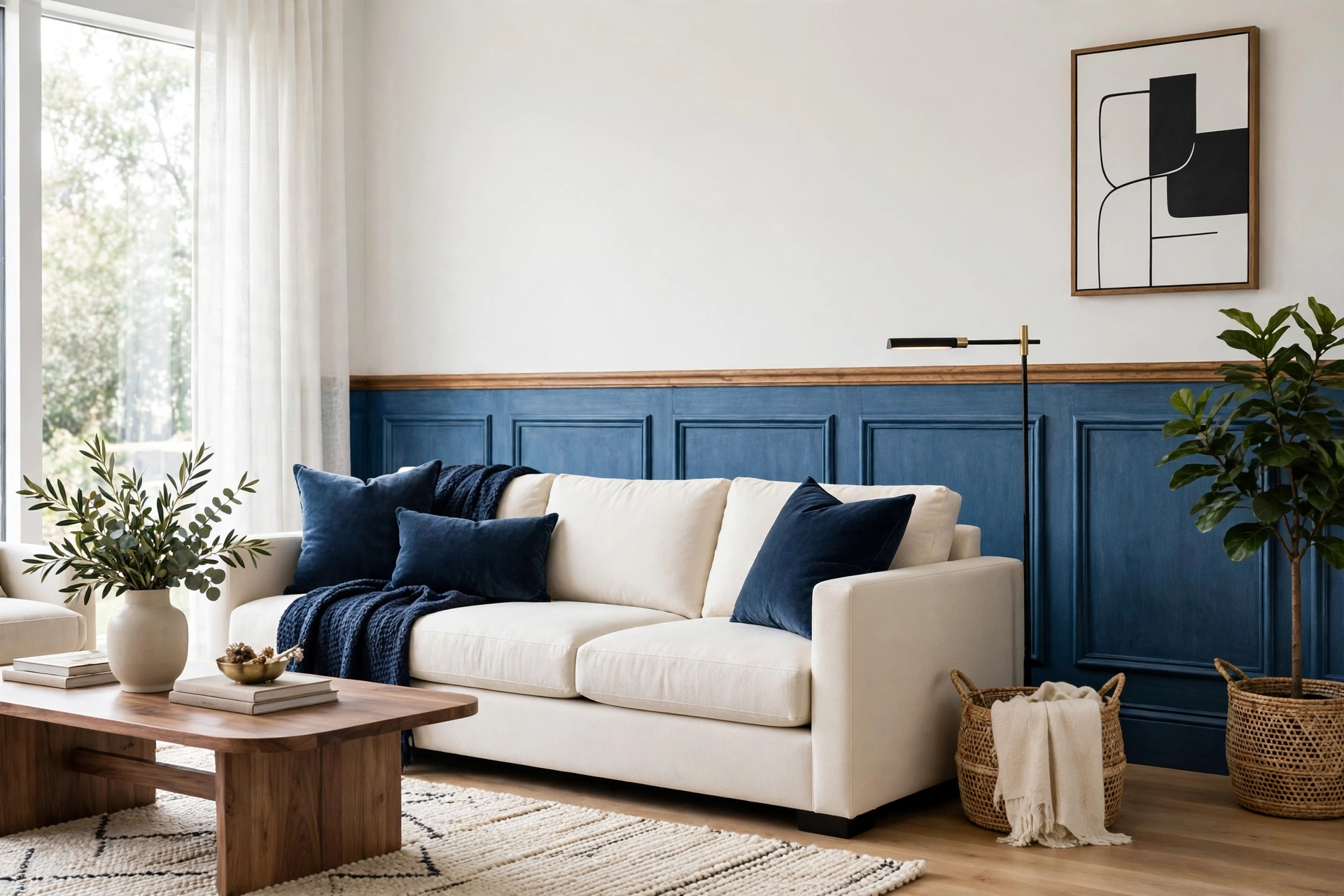
Step 1: Mark the rail line
Step 2: Paint the lower half
Step 3: Add the wood rail
24. Soft Black on a Single Statement Wall
Soft black sounds bold for a small room, yet one wall in a warm black feels cozy and modern. The dark tone makes art, mirrors, and pale furniture stand out sharply.
Paint a single statement wall in a warm soft black, and keep the rest bright white. A cream sofa, light wood, and a brass mirror will glow against the dark paint.
- Soft black statement wall
- Cream sofa, brass mirror
- Light wood, pale rug
Keep the art large and simple so the black wall reads as a frame. Soft black suits rooms with strong daylight, where the dark wall adds depth, not gloom.

One warm black wall frames art and pale furniture.
A small living room needs only one bold wall to feel finished. Each of these twenty-four colors offers a different mood to try.
Accent Wall Paint Colors can stay soft, rich, or dark. Pick the tone that suits your light and your furniture.
Start with a swatch on the wall you plan to paint, then live with it for a few days. Change the color only if the room asks for it.
Save your favorite color on Pinterest so you can find it when paint day comes. Your next living room refresh starts with one saved idea.
Comments