


Table of Contents
A dressing table can be the hardest piece to place in a bedroom. It needs light, a mirror, and room to sit, yet it must never crowd the bed.
The trick is to build your bedroom layout ideas around the dressing table instead of squeezing it in last. Ten arrangements below show exactly how.
Each one pairs the table with the bed, the window, or a quiet corner. Choose the layout that matches your room shape.
1. Float the bed, let the table act as a nightstand

Floating the bed changes the whole feel of a room. It opens walkways on both sides and stops the headboard from swallowing a wall.
Try this: place a low dressing table where a nightstand would stand. It holds a lamp, your book, and a small tray for jewelry.
The table’s extra surface beats a cramped nightstand drawer. Keep the chair pushed in so the side stays clean during the day.
Quick Tip
Slide the table a hand’s width from the bed frame, so drawers clear your bedding at night.
2. Slide the table under the window for real daylight

Daylight is the best mirror light you will ever own, and it costs nothing. Under a window, foundation and color match without guesswork.
Set the dressing table squarely under the sill, with the mirror catching the sky rather than a lamp. Keep the top low and tidy so the glass stays clear.
The bed then moves to the solid adjacent wall, which anchors the room. Sheers soften the glare while keeping the brightness you need.
3. Put the table at the foot of the bed as a divider
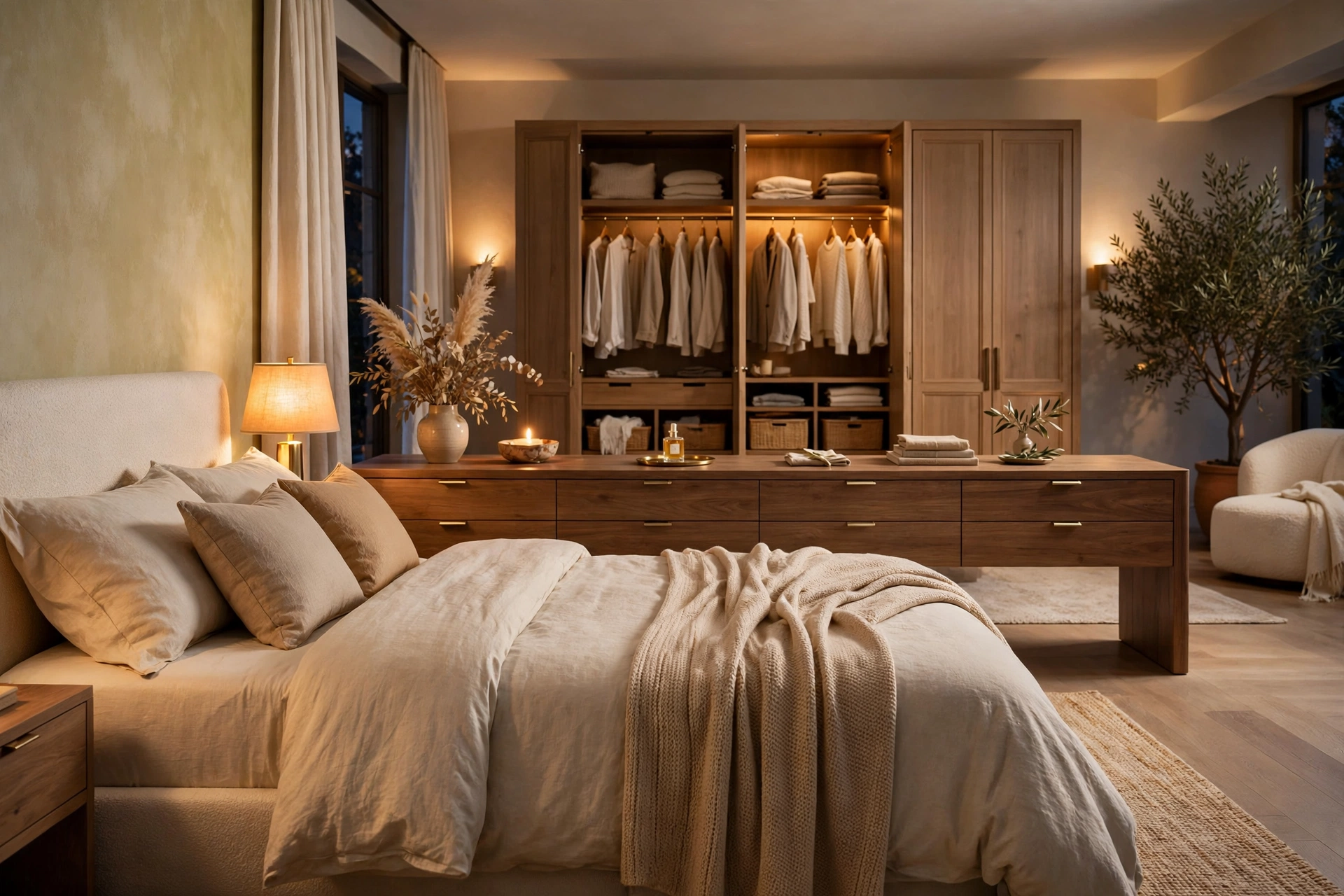
In a long primary suite, the foot of the bed often becomes dead space. A low dressing table turns it into a hardworking divider.
It separates the sleeping zone from the wardrobe side without blocking sightlines. A rug under the front legs ties both zones together visually.
Choose a table the same width as the bed or slightly narrower. Keep the top styled simply so it reads as furniture, not clutter.
When two children share one room, arranging twin beds with nightstands first sets the entire layout.
Measure bed width before shopping.
Leave a clear walkway past the table.
Style the top with three calm objects.
4. Hide the vanity behind a tall open shelf

Small rooms and studios need privacy, not more walls. A tall open shelf screens the dressing table while still letting light pass through.
Place the shelf between the bed and the table. The vanity becomes a tucked-away nook, and the shelf holds books and folded linens.
From the bed, the room still feels open because you can see through the shelving. It is the rare divider that adds storage instead of stealing space.
Keep shelves open on both sides.
Style with books and linens.
Block the screen with boxes.
Push the table too deep.
5. Face the table toward the bed under a single artwork

Symmetry calms a bedroom fast. Centering one large artwork above the dressing table gives the opposite wall a clear focal point.
Hang the art so its center sits near eye level when you stand. A mirror leaning beside it doubles the light and keeps the wall from feeling flat.
The bed then reads as the anchor, and the table as its quiet partner. Two matching lamps, one on the table and one on the nightstand, complete the pairing.
What to grab first
6. Angle the bed and let the table anchor the corner

Corner rooms and awkward walls defeat the usual bed-against-the-wall habit. Angling the bed frees every corner for a real purpose.
The dressing table slides into the empty corner behind the angled bed. That dead triangle becomes a bright vanity spot with two walls for shelves.
Fill the other corners with a leafy plant and a slim floor lamp. The room gains a boutique-hotel feel because nothing sits flush, crowded, and predictable.
Bed jammed against one wall, corners wasted.
Angled bed with a corner vanity nook that feels intentional.
7. Tuck the table just inside the closet alcove
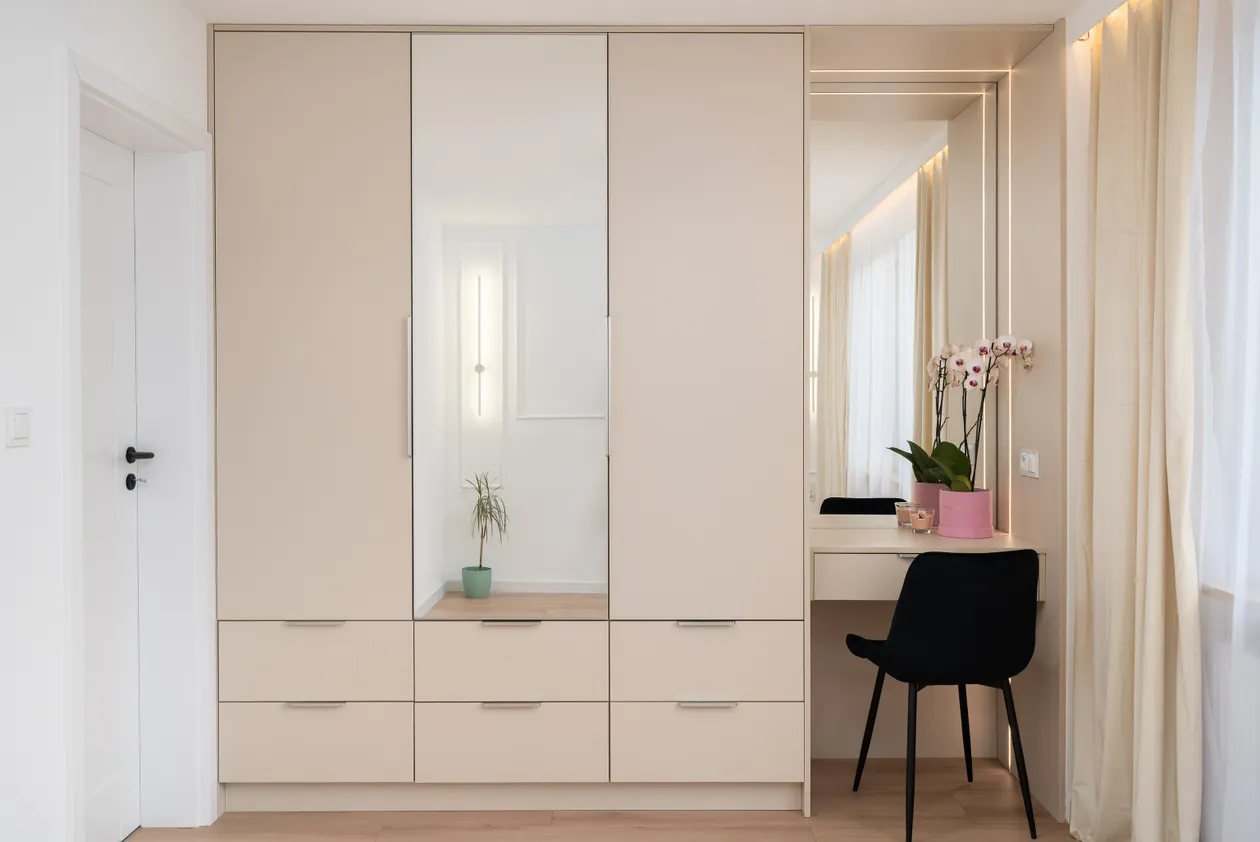
A closet alcove is wasted if it only holds shoes. The table turns the first step of the wardrobe zone into a dressing station.
Keep the table near the alcove entrance, not buried at the back. You can grab an outfit, sit down, and finish your routine in one trip.
Leave the closet doors or curtains open while you get ready. Daylight from the bedroom reaches the mirror, and the nook feels part of the room.
| Table in the alcove | Table lost in the bedroom |
|---|---|
| Outfits and mirror in one stop. | A longer morning walk to the wardrobe. |
8. Line the table along the wall behind the door
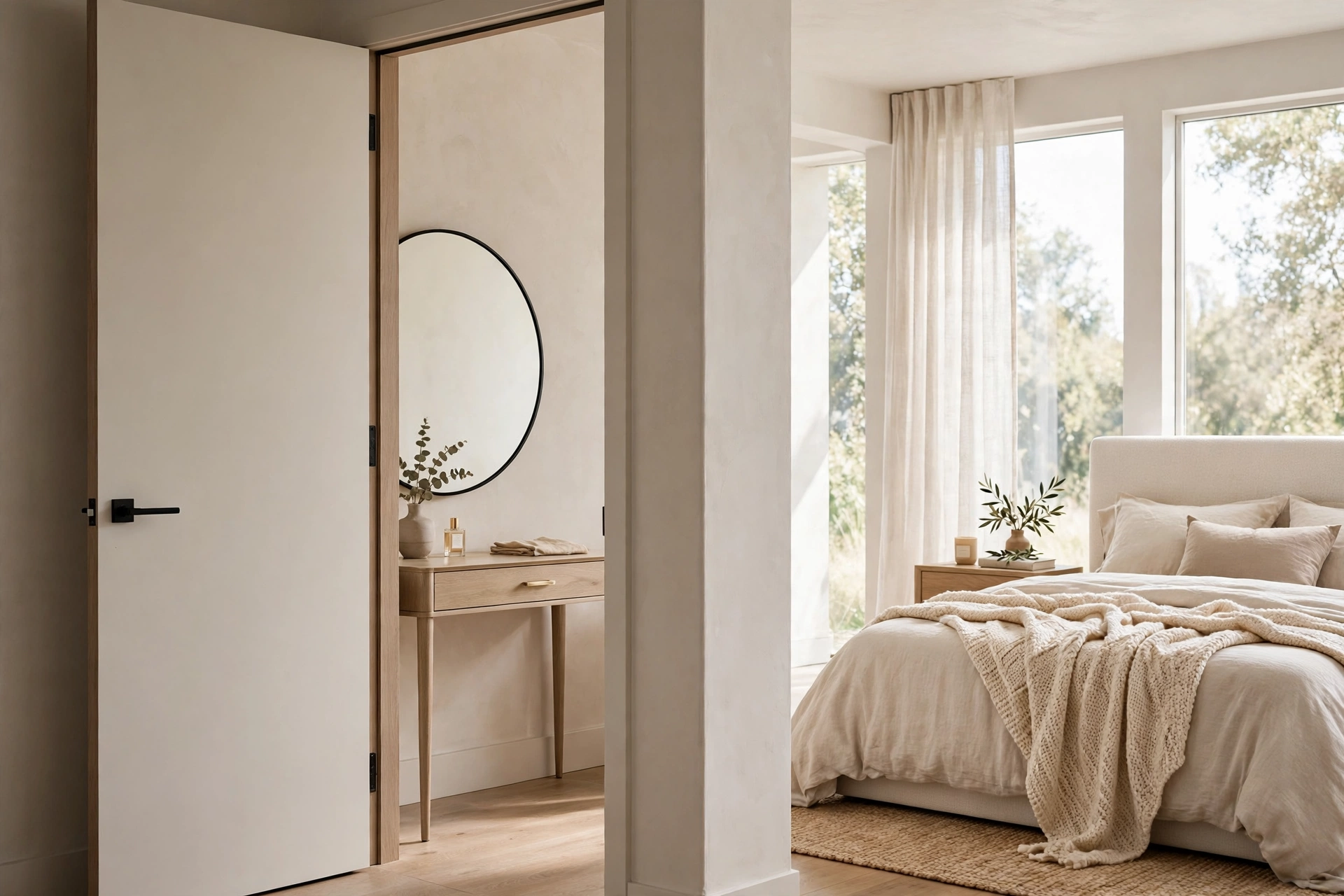
The wall behind a swinging door collects nothing but dust. A slim dressing table fits that strip perfectly because it needs little depth.
Check the door swing first. The table must sit fully clear of the arc. Tuck the chair in so the door never clips it.
This spot suits narrow rooms where every other wall is taken. A mirror on the wall bounces light back into the room and doubles the sense of space.
9. Pair the table with an armchair in one quiet corner

A dressing table does not have to work alone. Pairing it with an armchair builds a corner that serves two moods: getting ready and winding down.
The chair gives you a real seat for long routines. A floor lamp behind the chair lights both the mirror and your evening book.
Keep the palette tight so the corner feels designed, not accidental. One throw and one small plant are enough to finish it.
- ▸One armchair, not two.
- ▸A floor lamp behind the chair.
- ▸Keep the palette tight.
10. Mirror the layout: two tables flanking one window

Wide rooms can carry symmetry further than one table. Two matching dressing tables flanking a central window read as custom millwork.
Each side serves one person, so nobody queues for the mirror. The window light hits both seats equally, which keeps makeup application honest.
The bed centers on the opposite wall, and the room feels balanced from the doorway. It is the most calm and hotel-like of all ten arrangements.
Symmetry only works when both tables match exactly, down to the stools.
Conclusion
The best spot for a dressing table is the one that fits your light, your door swing, and your morning routine. Start with the layout that matches your room shape, then fine-tune the chair and mirror height.
Small rooms gain privacy from screens and alcoves, while wide rooms can carry symmetry with confidence. Measure twice, keep walkways clear, and let the table earn its floor space every day.
If one of these bedroom layout ideas sparked a plan, save this page to Pinterest so it is waiting when you rearrange. Your future self will thank you at 7 a.m.
📌 Pin it for later
Save your favorite dressing table layout to Pinterest for later.
Comments