


Table of Contents
Most small bedrooms follow the same tired formula.
Bed centered on the longest wall, nightstands on both sides, dresser squeezed in where it fits.
When the room refuses to cooperate, that formula leaves dead corners. You get a bed you can barely walk around.
These Small Bedroom Decor Ideas break the standard room layout on purpose. Each one rethinks where the bed, storage, and seating can live. A tight footprint then feels open, personal, and genuinely livable.
1. Angle the Bed Diagonally to Free Up Corners
A bed pushed flat against the wall can choke a small room.
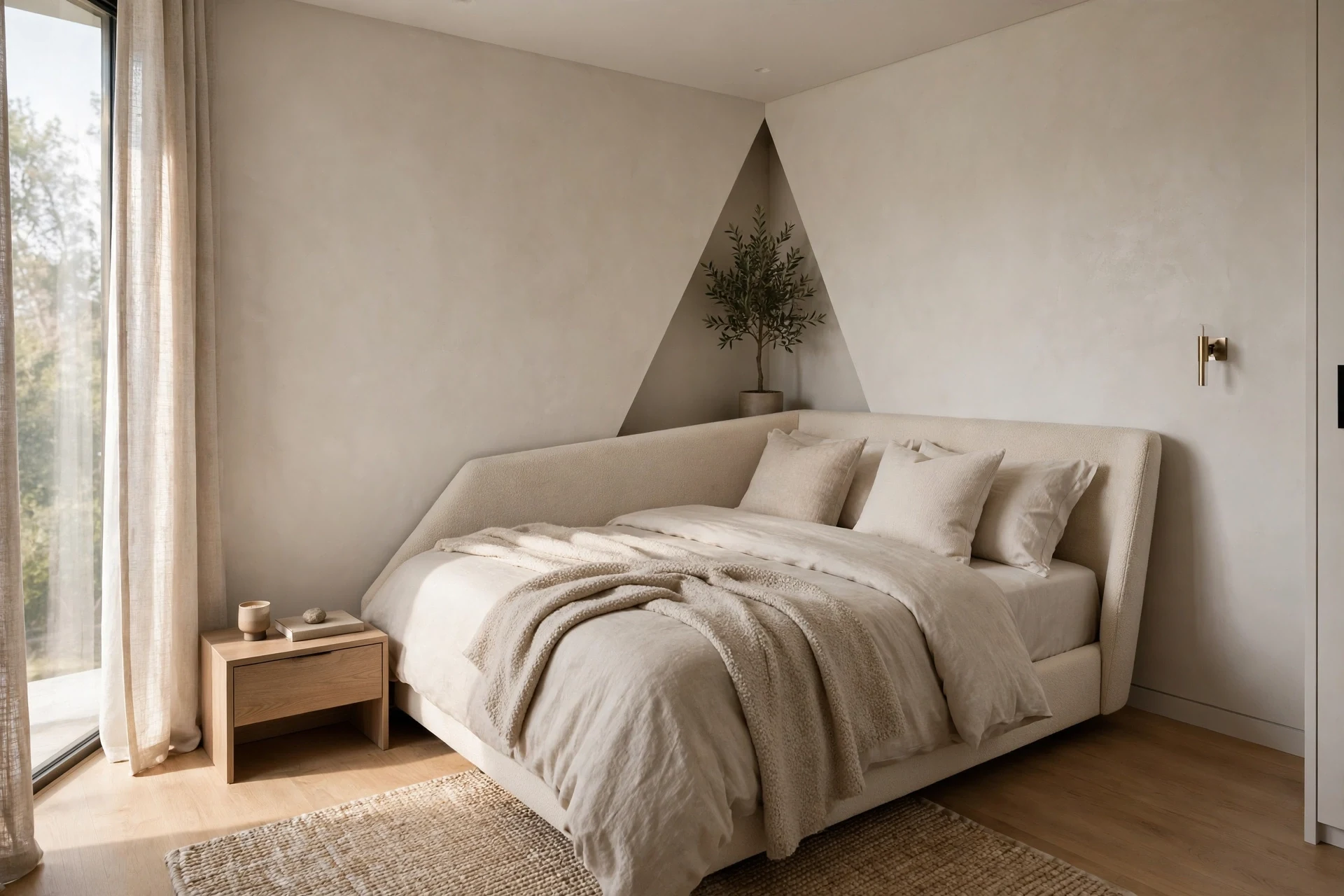
Angling it across a corner looks bold at first, but it opens up hidden floor space. The triangle behind the headboard fits a small plant or a stack of books.
Both front corners stay open for a nightstand and a laundry hamper. Pull the bed out at least six inches from each wall so bedding hangs freely.
Choose a simple headboard so the diagonal line stays clean. The room reads larger because the eye follows the long sightline.
Quick Tip
Measure the diagonal first: tape the bed footprint on the floor before moving anything heavy.
2. Put the Bed on the Window Wall
Bedrooms do not require a solid wall behind the bed.
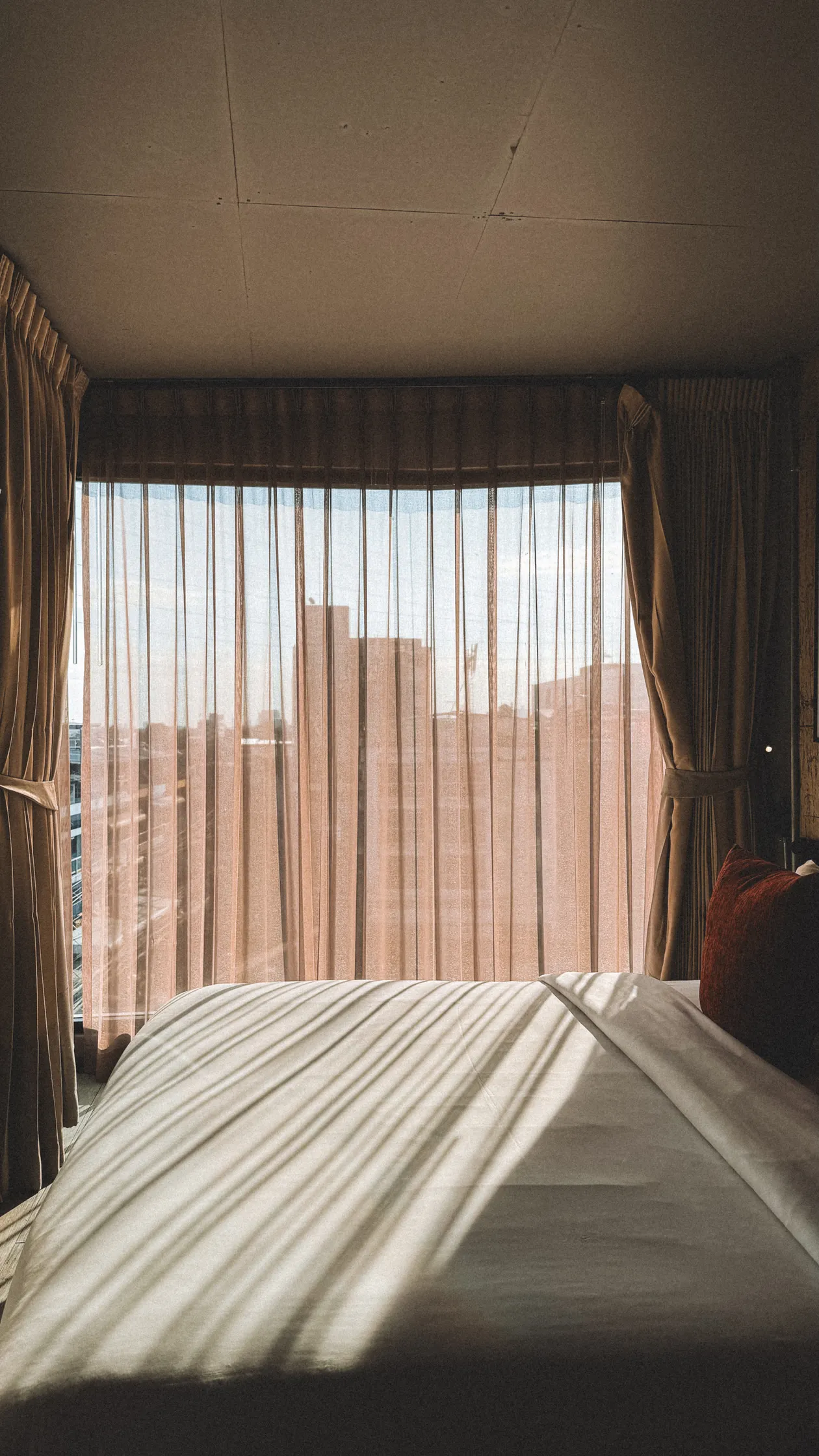
Placing the bed under the window turns the brightest wall into the headboard wall. Morning light wakes you gently, and the window frame adds free architecture.
Keep the headboard low so glass stays visible above it. Sheer curtains soften the light without blocking the view.
Skip heavy drapes that fight the bed for space. One warning: check for drafts before you commit.
A thin draft stopper behind the mattress solves most issues. This move works best in rooms where the door swings against the solid wall.
Before
Bed on the dark solid wall, dim corner.
After
Bed on the window wall, daylight as backdrop.
3. Install a Murphy Bed That Folds Into Art
A murphy bed erases the bed from the room entirely.
Folded up, it looks like a paneled cabinet or a large framed print. Guests see a reading room, not a bedroom.
Choose a mechanism with a leg that swings down automatically for safety. Wall anchoring is nonnegotiable, so locate studs before you buy.
Leave two feet of clear floor in front for the swing. Many models include side cabinets for bedding.
The price runs higher than a standard frame, but you gain a whole second room each day.

Locate wall studs first.
Clear two feet of floor.
Anchor the cabinet frame.
4. Raise the Bed on a Loft Over a Lounge Corner
Vertical space is free real estate in a small bedroom.
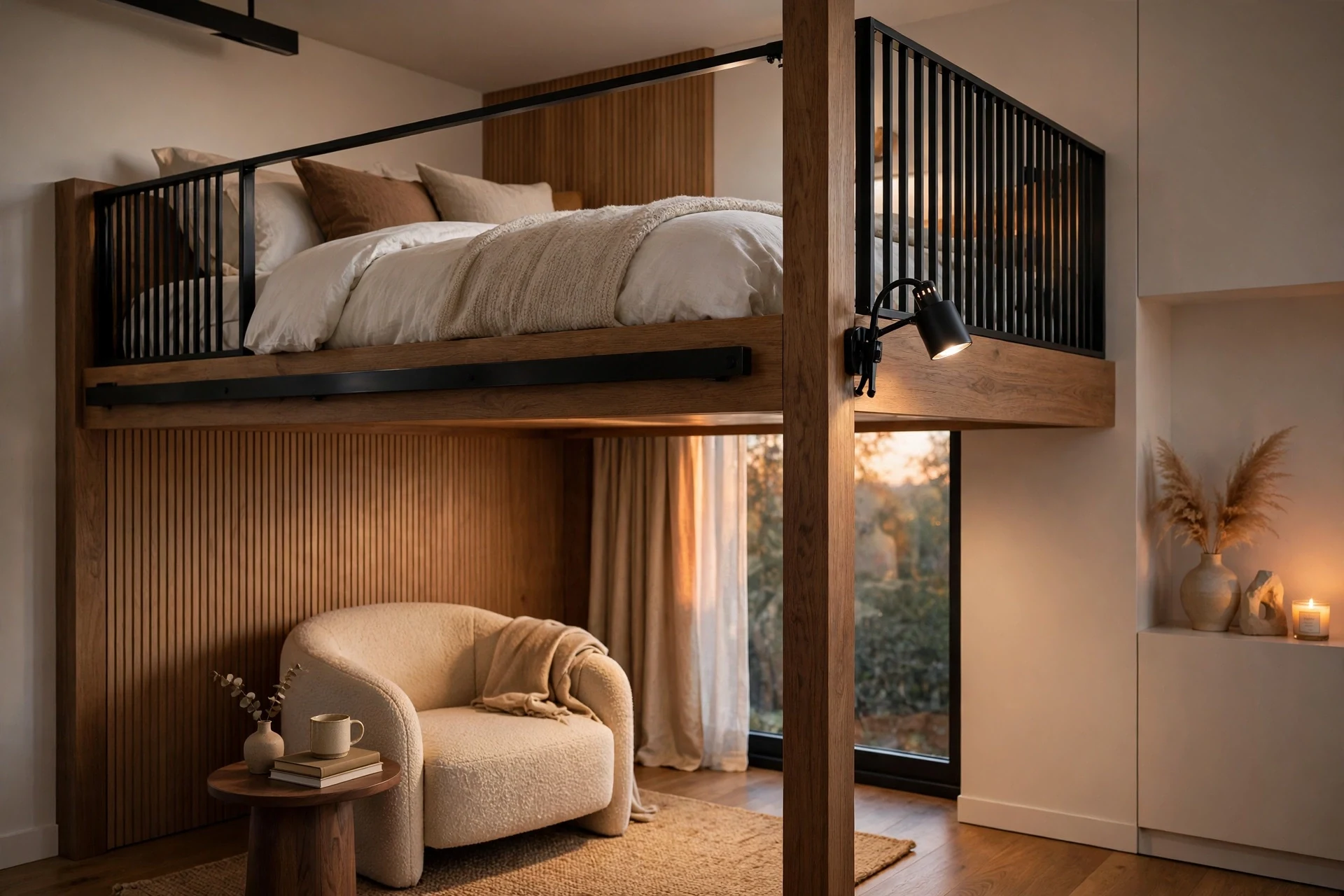
A loft bed lifts the mattress overhead and hands the floor back to you. Slide an armchair and a small side table underneath for a private lounge.
Add a clip-on reading light to the frame so the nook stays usable at night. Check your ceiling height first: you need enough clearance to sit up in bed.
Sturdy guard rails are essential, not optional. This setup suits one sleeper best.
Two people rarely enjoy climbing down at 3 a.m.
Do
Add guard rails and a clip light.
Skip
Tall bookshelves under the loft.
5. Carve a Built-In Bed Nook Into the Wall
A recessed bed nook feels like a private cabin inside the room.
The surrounding walls hug the mattress and block visual noise from the rest of the space. Build the platform from plywood and paint it the wall color for a seamless look.
Add sconces on both side walls instead of nightstands. Curtains across the opening close the nook at night and open it by day.
Keep the bedding simple so the nook reads calm, not cramped. Measure twice: standard mattresses have no forgiveness.

- >Platform painted wall color.
- >Sconces instead of nightstands.
- >Curtains for day and night.
6. Run a Daybed as a Sofa by Day
A daybed plays two roles without a costume change.
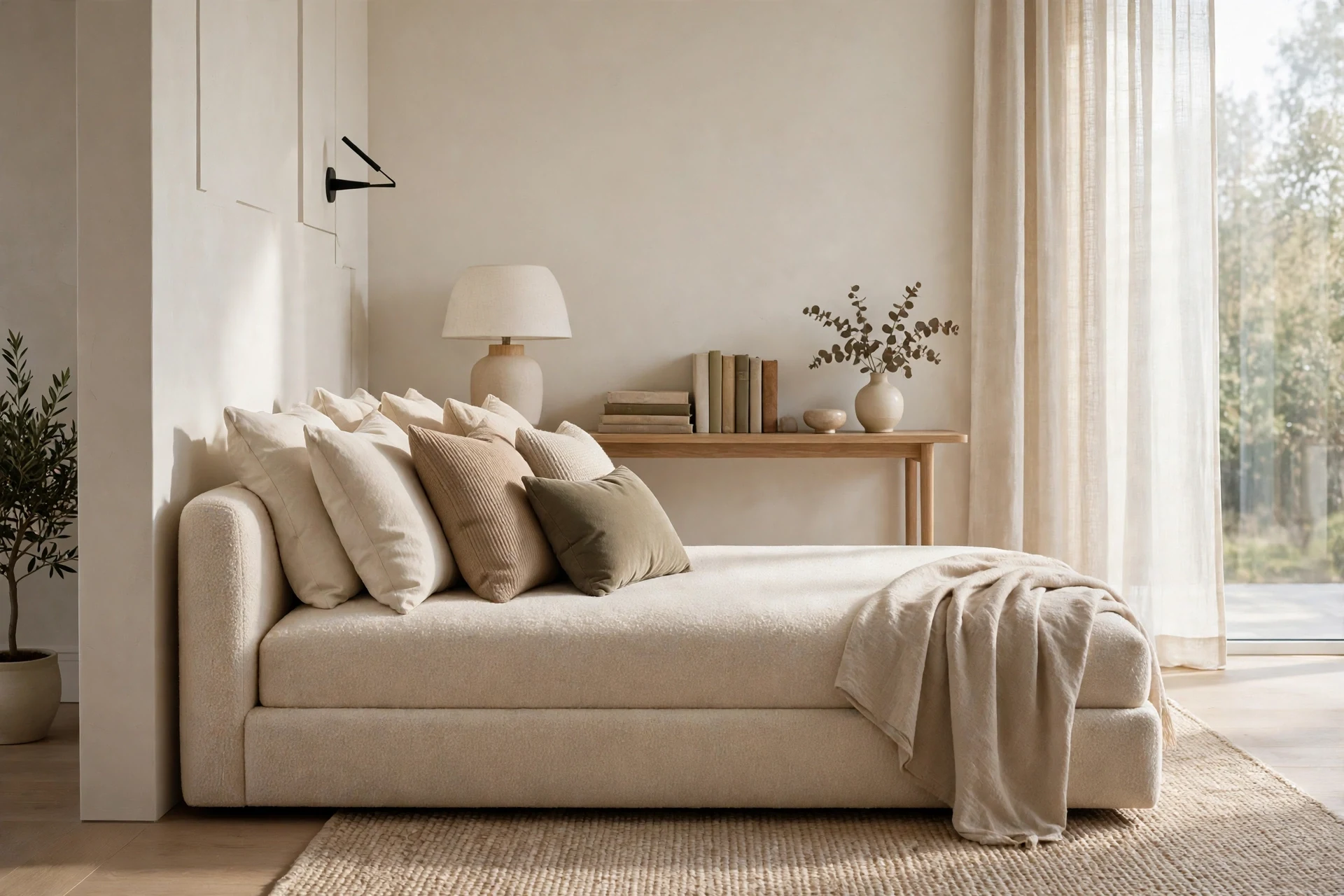
By day it reads as a deep sofa for reading and guests. By night it becomes a full sleeping spot with real bedding.
Push it against the longest wall and stack throw pillows along the back edge. A slim console table behind it holds lamps and books.
Since studio living squeezes sleep into one room, carving out a real bedroom corner matters. studio sleeping zone ideas show how to do it well.
Choose a twin or twin XL mattress for a true single bed feel.
Day
Deep sofa seating.
Night
Full twin bed.
Best for
Studio sleepers.
7. Build a Corner Reading Nook in Dead Space
Every small bedroom has one dead corner that collects clutter.
Claim it for reading instead. A compact armchair angled into the corner needs only four square feet.
Hang a small wall sconce above shoulder height for evening light. A round side table holds tea and a novel.
Keep the palette close to the wall color so the nook blends in. Add one textured throw for comfort.
The trick is commitment: once the chair lands there, the clutter finds a real home elsewhere.

Reading nook essentials
8. Mount a Fold-Down Desk on the Foot Wall
Desk space often loses the battle in small bedrooms.
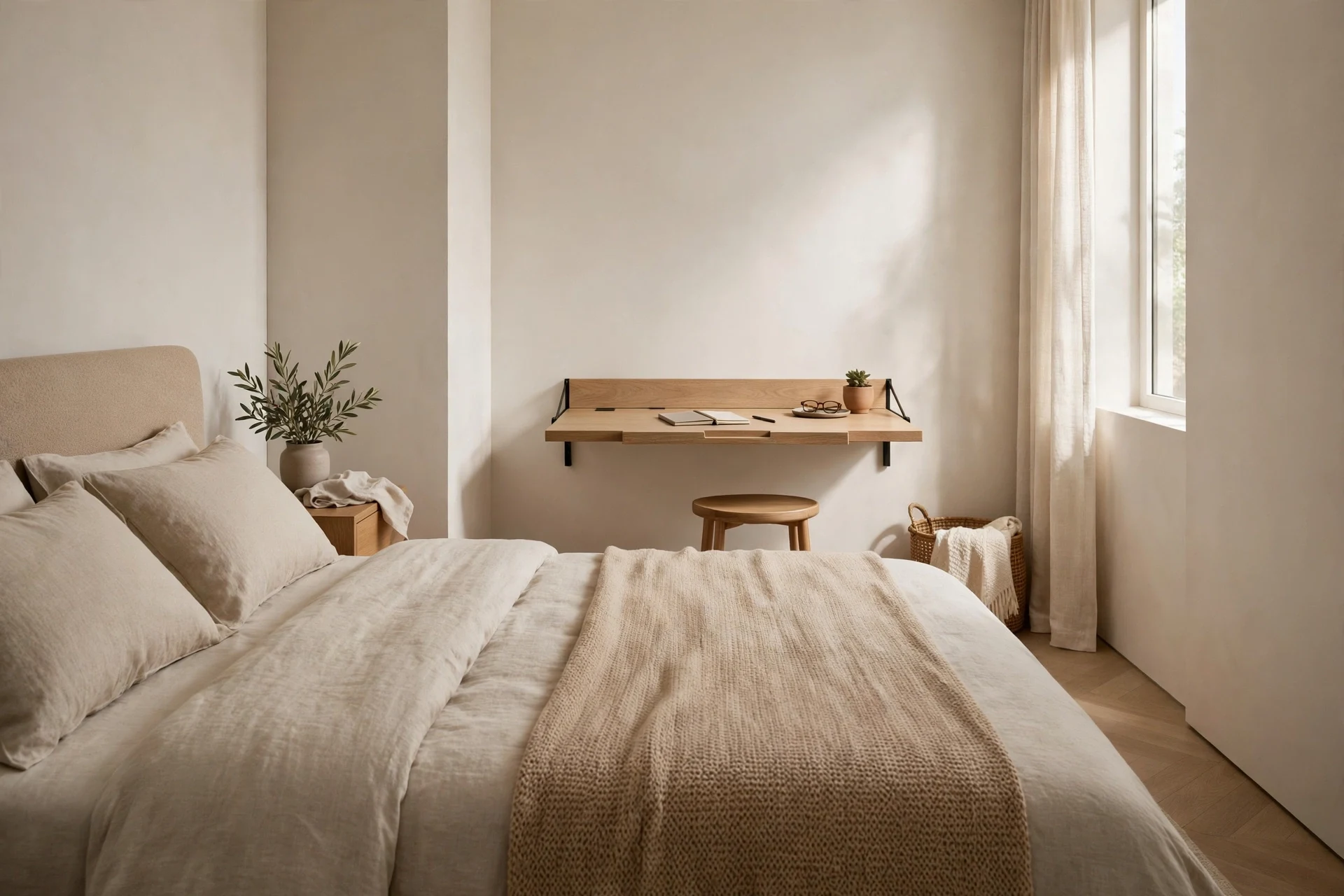
A fold-down desk mounted at the foot of the bed wins it back. Open it for morning journaling or laptop work, then fold it flat when you sleep.
Choose a model with a lip so pens stay put. Mount it at true desk height, around 29 inches.
Pair it with a stool that tucks underneath completely. Cable clips along the underside keep chargers tidy.
When closed, it reads as a slim wall panel, not a desk in hiding.
Effort: low
Cost: low to medium
Best for: remote workers
9. Keep the Profile Low With a Platform Bed
Low furniture makes ceilings feel taller.
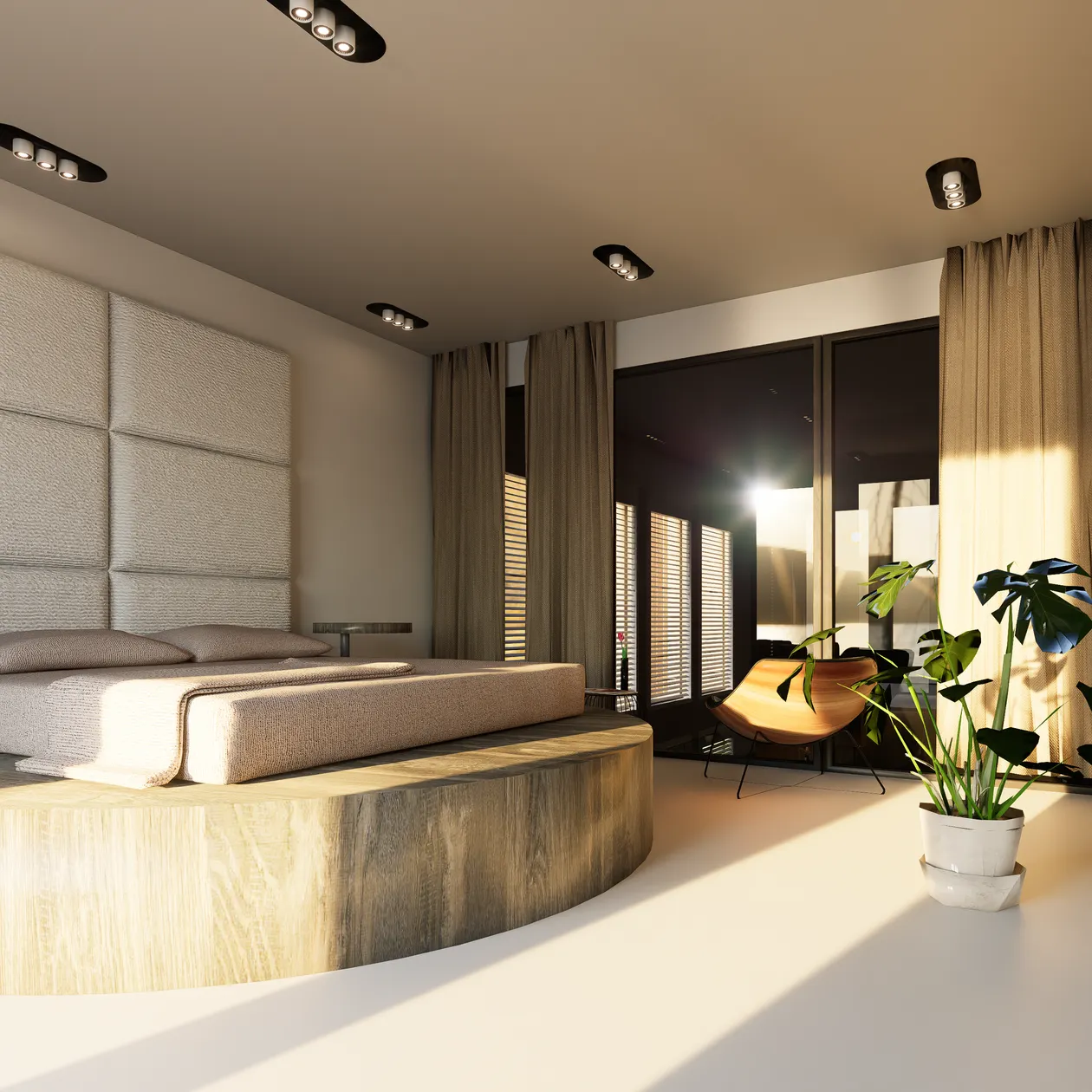
A platform bed sits just inches off the floor and stretches the room upward visually. Skip the box spring and lay the mattress directly on slats.
Under-bed drawers still work if you choose shallow ones. Keep the headboard modest, or skip it and paint a simple rectangle on the wall.
Bedding in one calm color keeps the low line unbroken. This layout suits rooms with great rugs, since the floor becomes part of the view.
| Low platform | Standard frame |
|---|---|
| Taller-feeling ceilings. | Easier under-bed access. |
| Floor on display. | Boxier look. |
10. Zone the Layout With a Round Rug
Square rooms beg for rectangular rugs, but round rugs break the grid beautifully.
A large round rug under the bed softens every hard corner in the room. Let at least two feet of rug extend past the bed on the open sides.
Choose a flat weave so doors clear it easily. The curve draws the eye in a circle instead of a box, which calms visual clutter.
Layer a smaller textured rug on top for depth. Round shapes also make tight walkways feel intentional rather than leftover.

Let the curve lead: round rugs soften boxy rooms instantly.
11. Divide the Room With an Open Bookshelf
An open bookshelf splits one small room into two useful zones.
Place it perpendicular to the wall between the bed and a desk or chair. Light passes through the shelves, so the room never feels cut in half.
Anchor it to the wall for safety, especially on carpet. Style the shelves loosely: books, one plant, a few empty gaps.
Crowded shelves turn a divider into a wall. Leave the top shelf low enough to see over while seated.
The bed side stays private while the far side works.

Watch Out
Anchor the shelf to the wall. A loaded divider can tip on carpet.
12. Tuck the Bed Under a Sloped Ceiling
Sloped ceilings scare people away from the low side of the room.
That low side is actually the perfect bed spot. Sleeping needs less headroom than standing does.
Push the headboard into the lowest point and let the ceiling rise over the foot. Add a low dresser along the slope for storage that fits the angle.
Wall-mounted reading lights replace nightstands here. Paint the slope and walls one color so the angle disappears.
The bed feels tucked in, like a custom cabin berth.

Before
Low slope wasted on boxes.
After
Bed tucked under slope, dresser fits.
13. Turn the Closet Into a Sleeping Alcove
A shallow reach-in closet can become the coziest sleeping alcove.
Remove the doors and slide a twin mattress inside the opening. The closet walls frame the bed like a built-in bunk.
Paint the interior a deep, restful color for a cocoon effect. A single wall sconce provides reading light without a nightstand.
The freed-up floor space fits a dresser or desk where the bed used to sit. Keep clothes in a slim wardrobe elsewhere in the room.
Check depth first: most closets fit a twin with inches to spare.
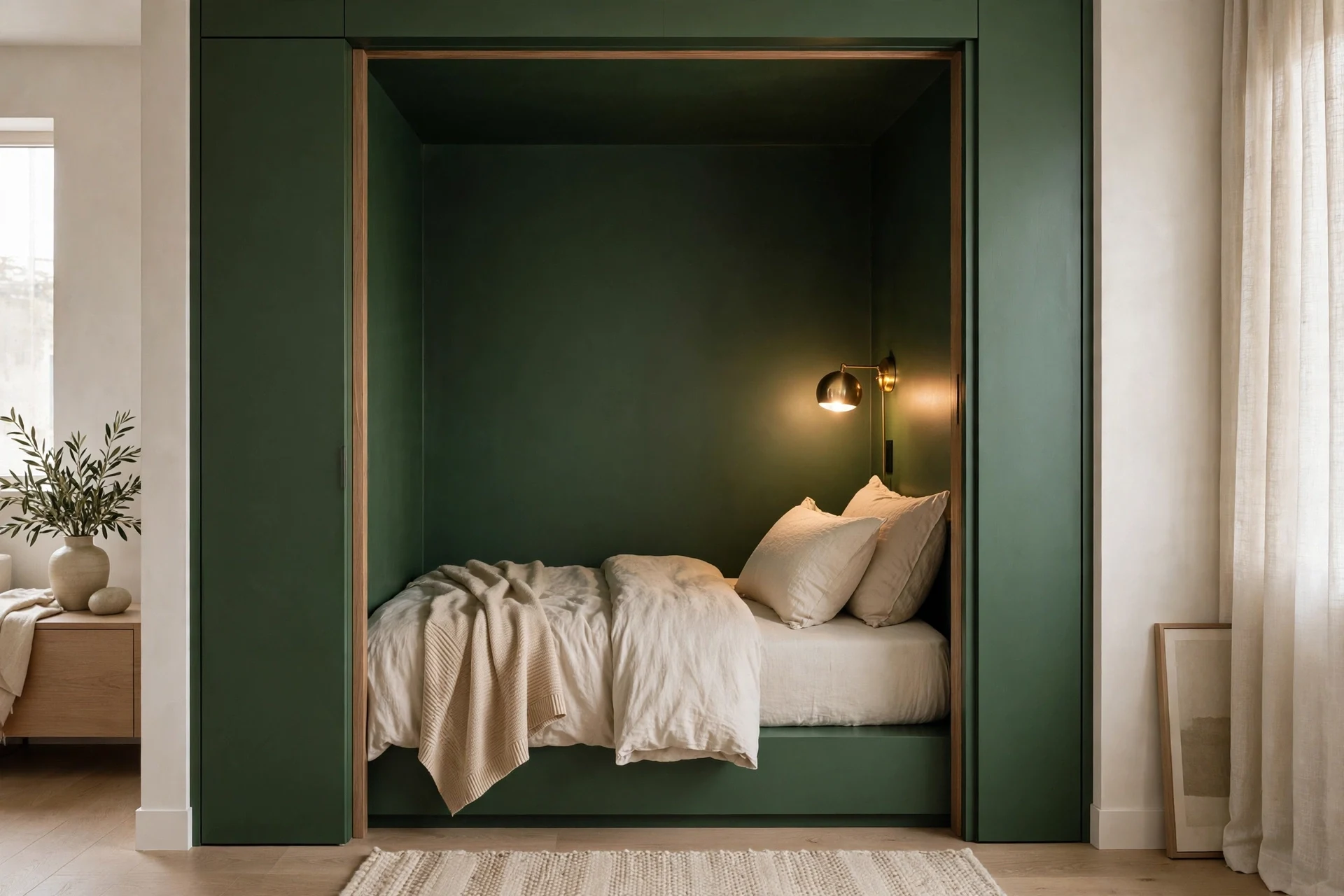
Remove closet doors.
Slide in a twin mattress.
Add one wall sconce.
14. Mount Nightstands on the Wall to Free Floor Space
Nightstands eat floor space that small bedrooms cannot spare.
Wall-mounted nightstands float beside the bed and leave the floor completely open. Cleaning underneath takes seconds, and the room breathes easier.
Choose a pair with a small drawer for the essentials. Mount them at mattress height so reaching over feels natural.
A floating shelf works too if drawers feel bulky. Add a wall-mounted reading light above each one and skip table lamps entirely.
The bed wall stays light and uncluttered from floor to ceiling.

Do
Mount at mattress height.
Skip
Bulky table lamps.
15. Hang the Gallery Wall Over a Low Dresser
The space above the bed is not the only gallery wall in the room.
Hanging art over a low dresser spreads visual weight around instead of stacking it all behind the pillows. Keep frames within the dresser’s width for a tidy rectangle.
Mix two frame finishes at most for calm. Leave breathing room between frames: two inches works well.
A small lamp on the dresser anchors the arrangement. This move lets the bed wall stay quiet, which helps a small room feel restful instead of busy.

- >Frames inside dresser width.
- >Two finishes at most.
- >Two inches between frames.
16. Stack a Bunk Over a Desk
Bunk beds are not only for kids.
A lofted twin over a full-size desk turns one footprint into a complete bedroom office. Adults can use sturdy metal or wood frames rated for grown-up weight.
Hang a curtain on the lower level for privacy during video calls. A desk lamp with warm light keeps the under-loft zone inviting.
Keep the ladder on the short end to save floor space. This layout fits students and remote workers sharing tight apartments especially well.

Sleep
Lofted twin up top.
Work
Full desk below.
Best for
Students and remote workers.
17. Bounce Light With a Mirror Across From the Window
A mirror hung directly across from the window doubles your daylight.
The reflection carries light into the darkest corner of the room. Choose a mirror at least two feet wide for real impact.
Lean a full-length mirror against the wall if hanging feels risky in a rental. Angle it slightly to catch the sky, not the neighbor’s wall.
Keep the glass clean: dust dulls the bounce fast. Avoid placing it where it reflects clutter, since it doubles that too.
One great mirror beats three small ones.

Mirror placement checklist
18. Frame the Headboard With Floating Shelves
Floating shelves around the headboard build storage into the wall itself.
Two short shelves on each side replace nightstands and hold books within reach. One long shelf above the bed displays art and small plants.
Keep shelf depth under ten inches so nothing looms over the pillows. Secure every shelf to studs: books get heavy fast.
Style with breathing room, not a packed library. The wall becomes the furniture, and the floor stays completely clear for easy movement.

Effort: low
Skill: beginner
Best for: book lovers
19. Define Zones With a Bare Canopy Frame
A canopy frame without curtains defines the sleeping zone with pure geometry.
Four slim posts outline the bed like an architectural drawing. The open frame keeps sightlines clear, so the room still feels airy.
Choose black or brass metal for a modern edge. Drape one string of warm fairy lights along the top rail for evening glow.
Skip heavy fabric: curtains would close the space back down. This works beautifully over low platform beds, where the posts add height the mattress lacks.

| Bare canopy | Curtained canopy |
|---|---|
| Airy sightlines. | Cozy and private. |
| Modern geometry. | Closes the room down. |
20. Break Symmetry With Mismatched Side Tables
Matching nightstands are a habit, not a rule.
Two different side tables bring personality to a small bedroom and solve awkward corners. Pair a small round table on one side with a stool on the other.
Keep heights within a few inches of the mattress top. Repeat one material or color between them so the pair feels chosen, not random.
This trick also lets you use furniture you already own. Symmetry is safe, but character wins in small rooms.

Match the height, not the table: character beats symmetry.
Small rooms reward bold layout choices more than big ones do.
Move the bed off its usual wall and lift storage onto the walls. Zone with rugs or open shelving to make a tight bedroom feel twice as useful.
Pick one idea from this list and try it this weekend. Small layout changes often bring the biggest relief.
These Small Bedroom Decor Ideas work best when you adapt them to your own walls and windows. Save this post to your bedroom board on Pinterest for later.
Comments